

A. Lange & Söhne
How Ferdinand Adolph Lange brought watchmaking to a poor Saxon town.
The Story
How Ferdinand Adolph Lange brought watchmaking to a poor Saxon town.
Picture a valley in the Ore Mountains of Saxony in the 1840s, thirty kilometers south of Dresden. The silver mines that once fed the region had run dry, and the town of Glashütte was sliding into poverty. There was no watchmaking here, no tradition to inherit, nothing but hardship and thin soil. Into this, a man named Ferdinand Adolph Lange arrived with an unlikely proposal.
Lange had been born in Dresden on 25 February 1815. At fifteen he was apprenticed to Johann Friedrich Gutkaes, the court watchmaker, and together the two built the Five-Minute Clock that still tells time above the stage at the Semperoper opera house. It was serious work for a young man, and it taught him precision. He traveled through France, England, and Switzerland to learn how the best in Europe did things, filling notebooks as he went.
He came back with a plan for the town as much as for himself. On 7 December 1845 he founded a workshop in Glashütte, secured by a loan of 7,800 thalers from the Royal Saxon Ministry of the Interior. The money came with a condition Lange embraced: train fifteen local apprentices and give a dying region a trade. He meant to start an industry in the town, not only a company.
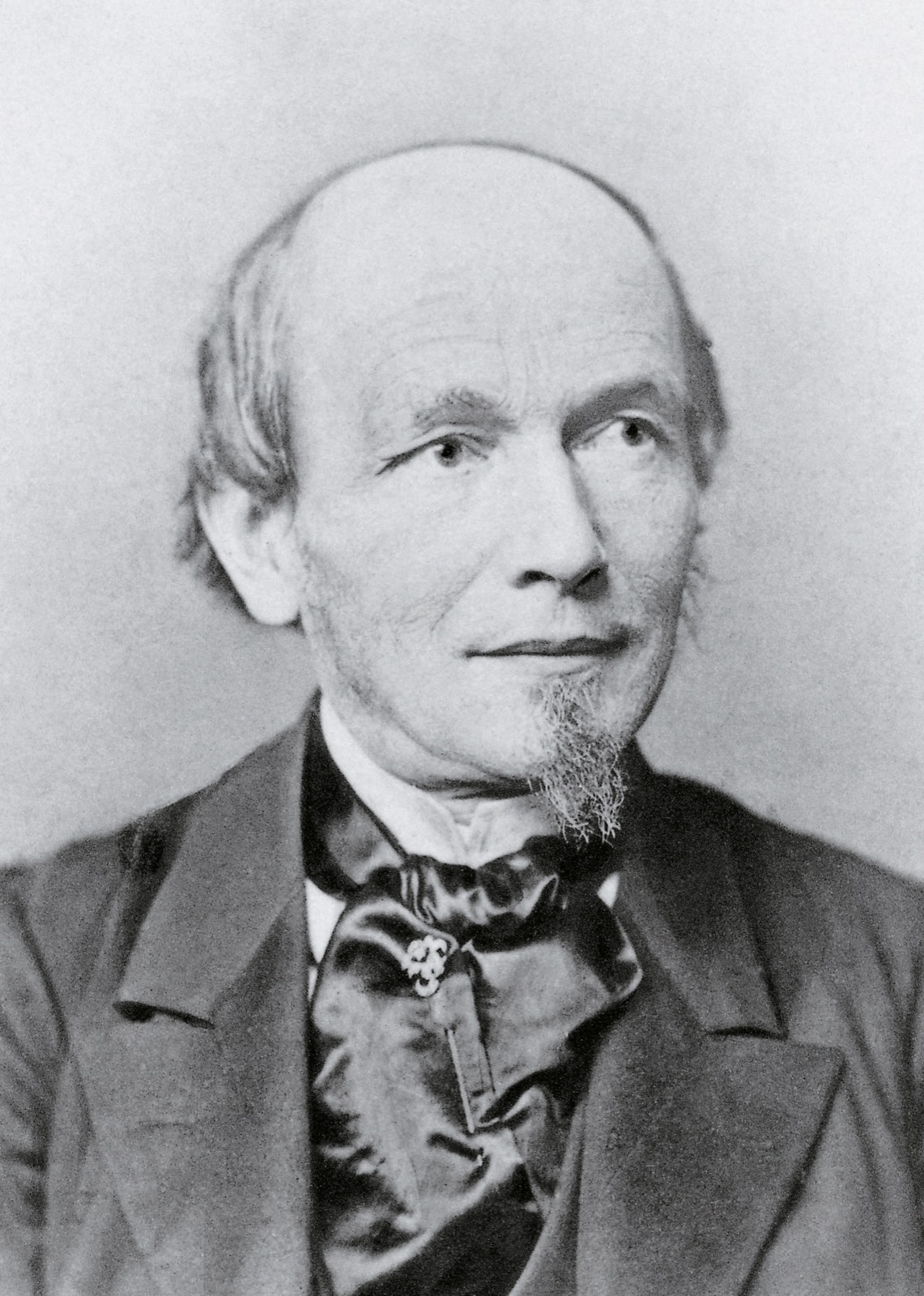
What made him unusual was that he wanted his apprentices to leave. Lange encouraged the men he trained to set up their own small supplier firms once they knew the work. Over time this created a cluster: dial makers, spring makers, case makers, all within walking distance of one another, each doing one thing well. The result was a network of small firms rather than one factory, and it turned Glashütte from a place people fled into a place people came to learn.
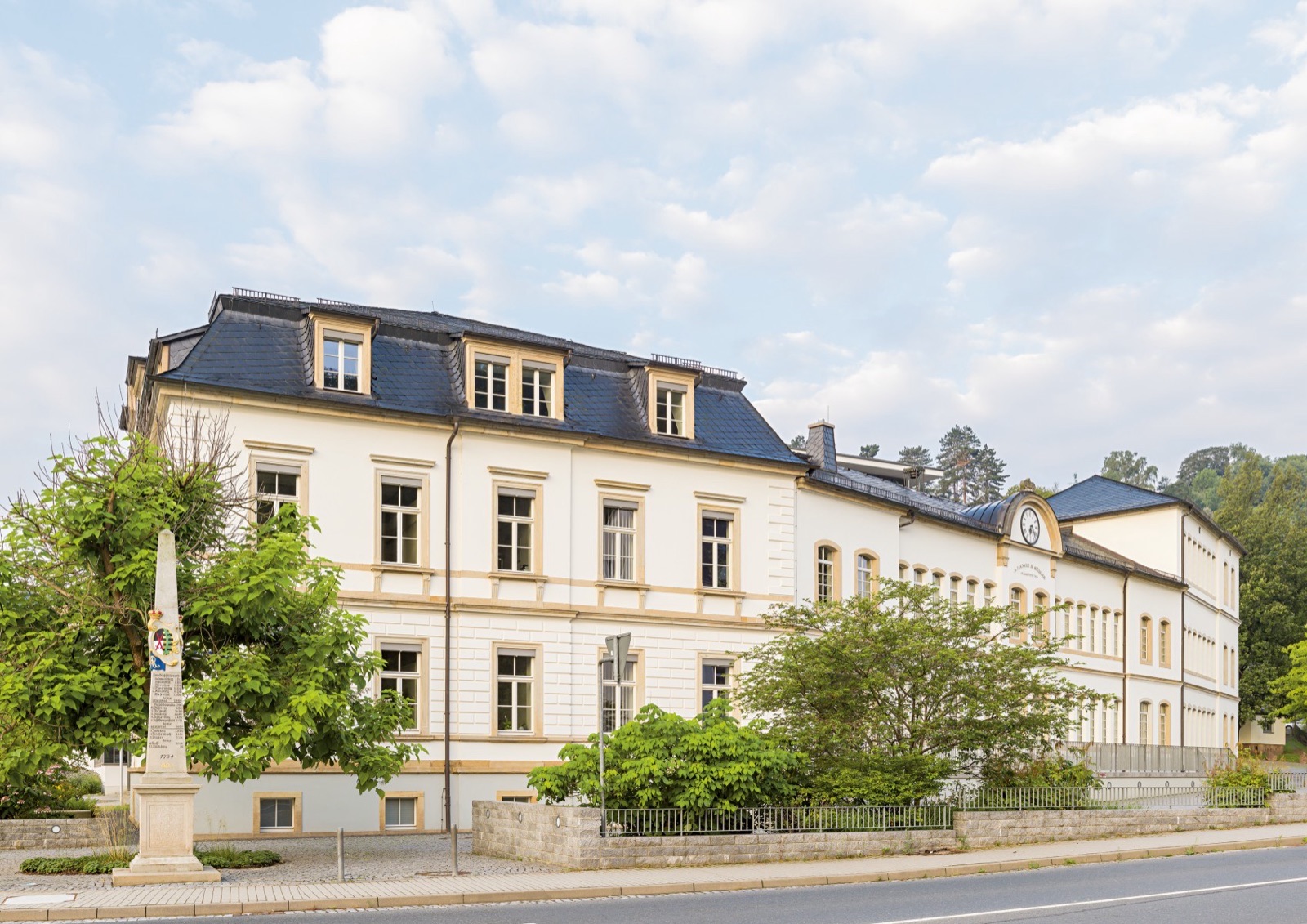
The watches themselves earned their reputation slowly, through pocket watches of real quality carried by people who needed reliable time and could afford the best. In 1868 Lange's elder sons Richard and Emil joined the business, and the name became A. Lange & Söhne, "Lange and Sons." In 1873 the company moved into the building known as the Stammhaus, a stone house that still serves as headquarters today.
Certain habits took root in these years and never left. Lange movements used a distinctive three-quarter plate, a single large bridge of metal that pins down most of the moving parts at once and gives the whole mechanism rigidity on every side. The plates were made from German silver, an alloy of copper and nickel that ages to a warm golden tone rather than needing to be plated. These were practical choices by people who intended their work to last.
For a century the house made some of the finest pocket watches in the world, until the war. The Second World War forced the Glashütte firms, Lange among them, into building military instruments using slave labour, a fact the modern company does not hide. On 8 May 1945, the last day of the war in Europe, a Soviet air raid nearly destroyed the main production building. Three years later, under Soviet occupation, the company was nationalized and simply ceased to exist. It had lasted exactly 103 years. The name went dark, and it stayed dark for four decades.
Philosophy & Identity
What Lange values, and how it finishes its watches.
The guiding line of the modern house comes from Walter Lange, the founder's great-grandson: "There's something one should expect not only of a watch but also of oneself: to never stand still." The company treats it as an instruction. It measures itself against its own past, which is a demanding standard when that past includes rescuing a town.
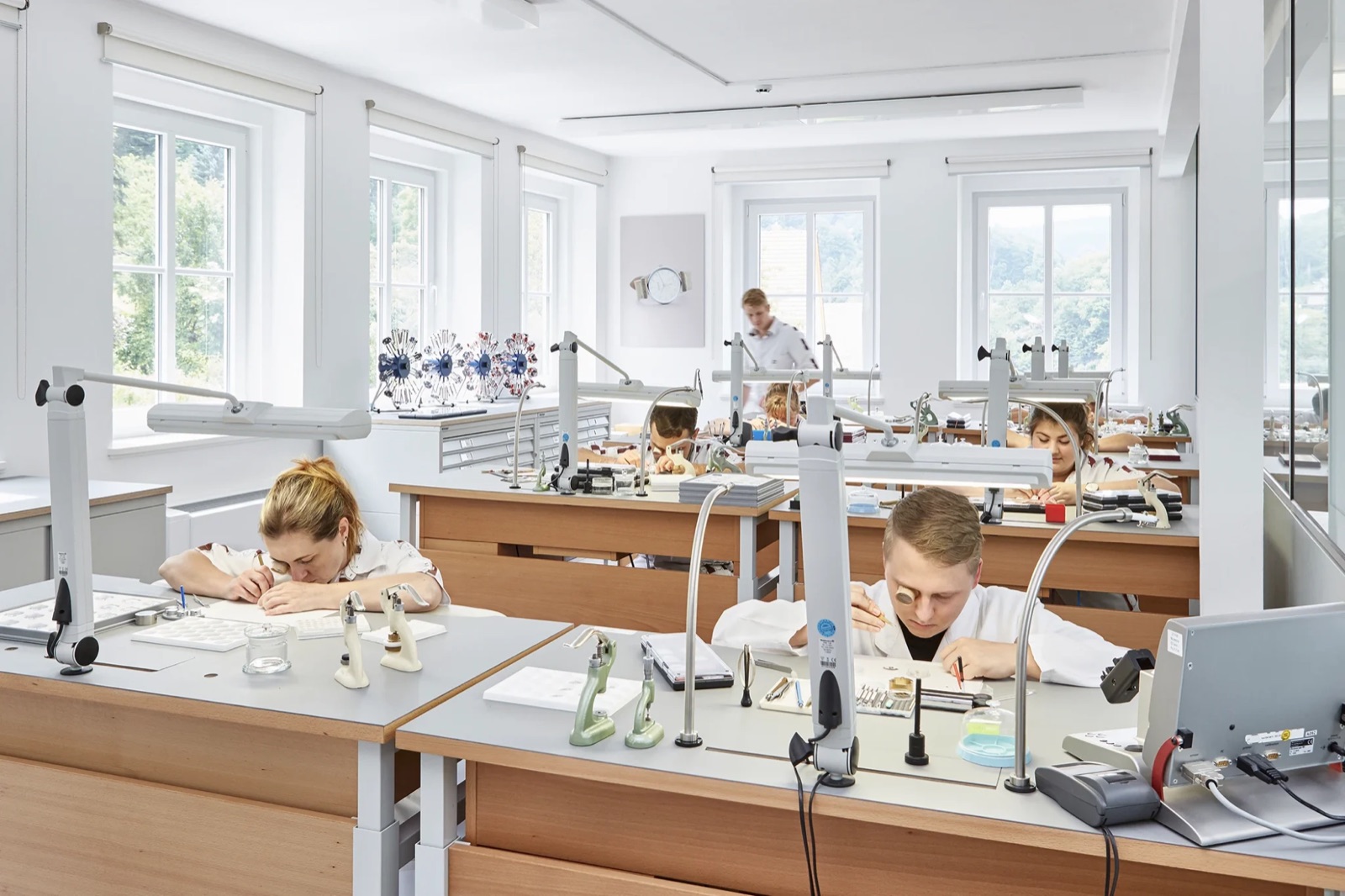
Every A. Lange & Söhne watch is Made in Germany, built in Glashütte, and equipped with a manufacture movement. That phrase deserves plain words. A "movement" is the mechanical engine inside a watch, the assembly of gears and springs that keeps time. To call it a "manufacture movement" means the company designs, makes, decorates, and assembles that engine itself rather than buying it ready-made from a supplier. Doing this is expensive and slow, and most watch brands do not attempt it. Lange treats it as the price of entry.
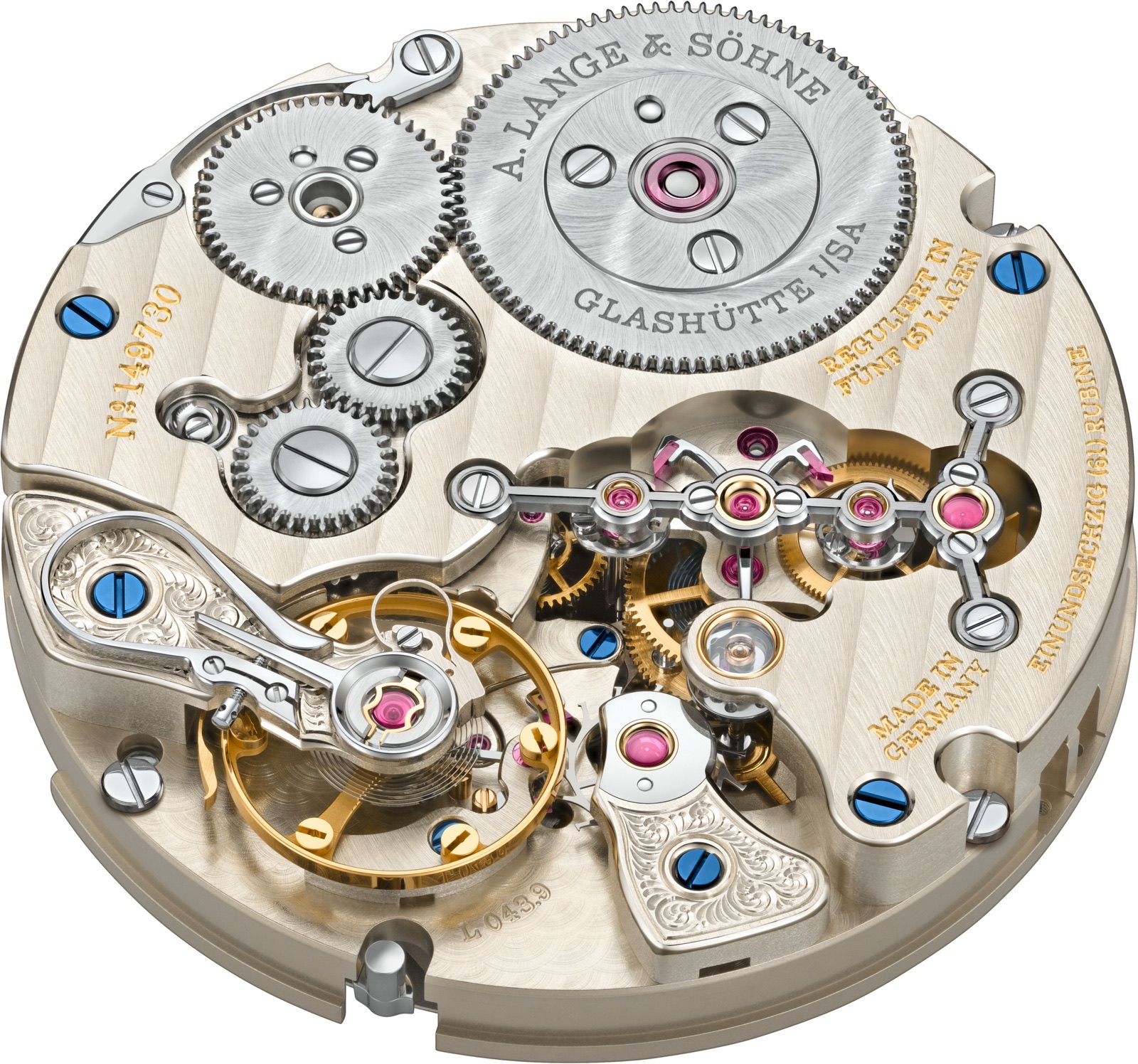
The finishing is where the philosophy becomes visible. Almost every part is decorated by hand, whether it is large or nearly invisible, whether the owner will ever see it or not. The vocabulary is specialized: circular graining and perlage, which are patterns of tiny overlapping circles polished into flat surfaces; mirror polishing, worked until steel reflects like a black pool; Glashütte ribbing, a striped pattern named for the town. The detail that identifies the house is the hand-engraved balance cock, the small bridge holding the balance wheel, engraved by one artisan whose hand no other can exactly copy. So no two are quite the same.
There is a small, deliberate defiance in all this. A part hidden under the dial gets the same attention as one on display, which makes little commercial sense. It tells you the company works for the standard rather than the audience.
Where does that leave them against rivals? Lange sits among the very few makers the trade treats as peers of Patek Philippe and the old Geneva houses, with one difference it never lets you forget. It is German, from Saxony, and its restraint differs from Swiss elegance. The watches are mostly gold or platinum, dressy, understated, engineered rather than styled. They are made for someone who wants the best and does not need anyone else to notice.
The Journey
Lange's history, from its founding to its closure and return.
The First Company · Building an Industry, Then Losing It
The original firm grew from Ferdinand Adolph Lange's workshop into the anchor of German precision watchmaking. Richard and Emil carried it after their father, and the Glashütte cluster their family had helped create supplied the parts and the talent. The pocket watches from these decades set a standard that the modern company still points to as its benchmark.
Then the twentieth century broke it. The war forced the firm into military production, the 1945 air raid destroyed the plant, and in 1948 nationalization erased the name. The last movement the original company developed, Caliber 48 and its wristwatch version Caliber 28, went into production in 1949 under new ownership, the last work of a house that no longer existed.
The Silent Decades · Absorbed and Erased
After nationalization, the seven remaining watch factories and suppliers in Glashütte were merged in 1951 into a single state-owned enterprise, VEB Glashütter Uhrenbetriebe. The distinct houses, their names, their rivalries, and their reputations were folded into one anonymous entity behind the Iron Curtain. For nearly forty years there was no A. Lange & Söhne, only a state factory in a town most of the world had forgotten.
The family, though, had not forgotten. Walter Lange, great-grandson of the founder, had fled west. He carried the memory of the company through the decades when it existed only as a name on old pocket watches traded among collectors.
The Refounding · A Comeback Timed to History
On 7 December 1990, exactly 145 years to the day after Ferdinand Adolph Lange founded the original firm, Walter Lange refounded it. He did not do it alone. Günter Blümlein, a shrewd watch industry executive, brought the strategy and the backing, drawing help from Swiss houses including IWC and Jaeger-LeCoultre. The Berlin Wall had fallen the year before. Germany was reuniting, and one of its lost crafts was coming home.
They had to build almost everything from scratch: the movements, the tooling, the trained hands. Four years of quiet work followed. Then, in 1994, the company presented its first modern wristwatches, and among them was the watch that would define it.
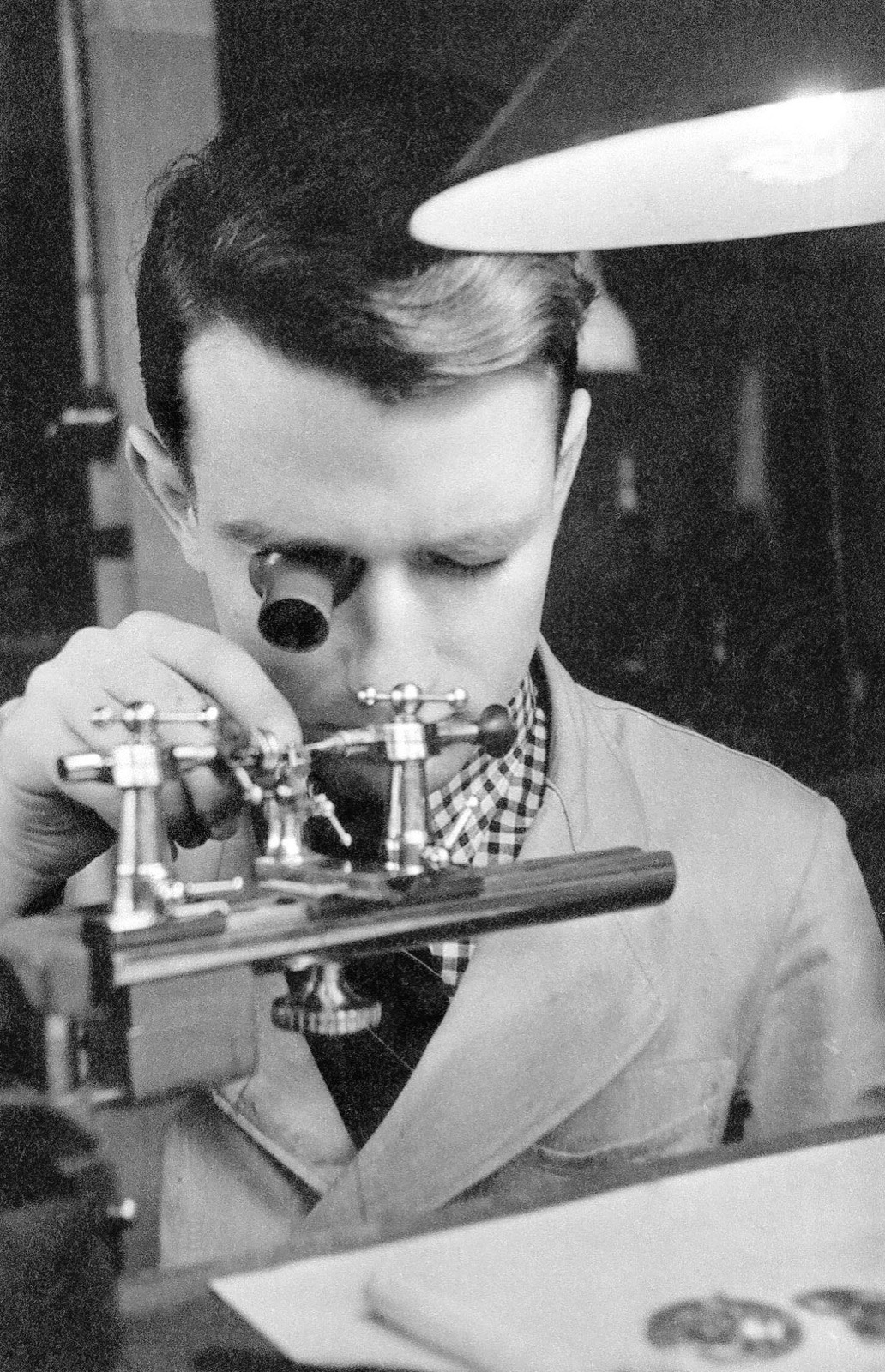
The pace was startling. In 1999, at the Basel watch fair, the company unveiled the Datograph, a chronograph, meaning a watch with a built-in stopwatch, engineered entirely in-house. For a company only nine years old to build a complication of that difficulty from the ground up was close to unheard of. The watch world took notice, and it has been paying attention since.
The Richemont Era · Backing and Restraint
In 2000 the Swiss luxury group Richemont, founded in 1988 by the South African businessman Johann Rupert, acquired Lange alongside IWC and Jaeger-LeCoultre. Corporate ownership brought resources and stability without diluting what the company was. Under CEO Wilhelm Schmid, appointed in January 2011, Lange did something counterintuitive for a luxury brand: it shrank on purpose. Points of sale were cut from 270 to 52, concentrating the brand in its own boutiques rather than spreading it thin.
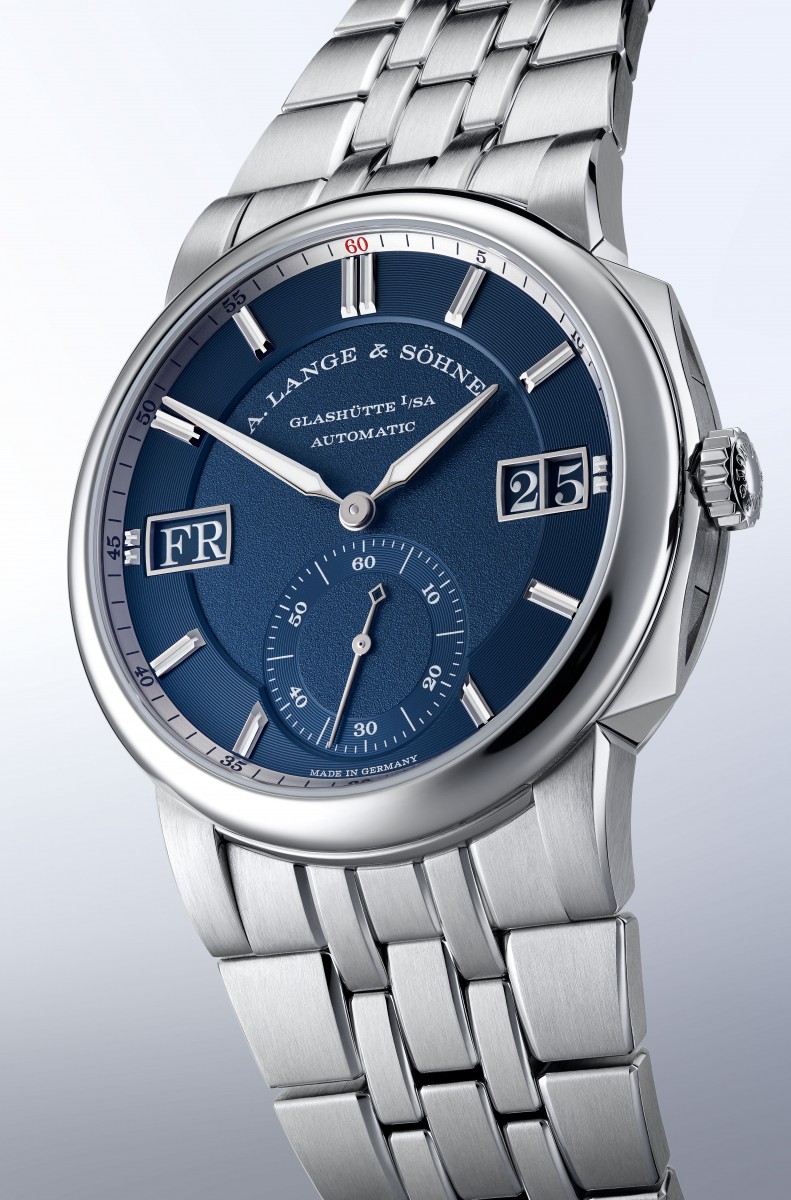
The modern chapters kept coming. In 2017 Walter Lange died at 92, having lived to see his company vindicated. In 2019, for the 25th anniversary of the refounding, the company released the Odysseus, its first steel sports watch made in series, a genuine departure for a house built on gold and platinum. In 2020, for the 175th anniversary of the original founding, it unveiled a memorial statue of Walter Lange in Glashütte.
Defining Innovations
Lange's outsize date, the Zeitwerk, and its grand complications.
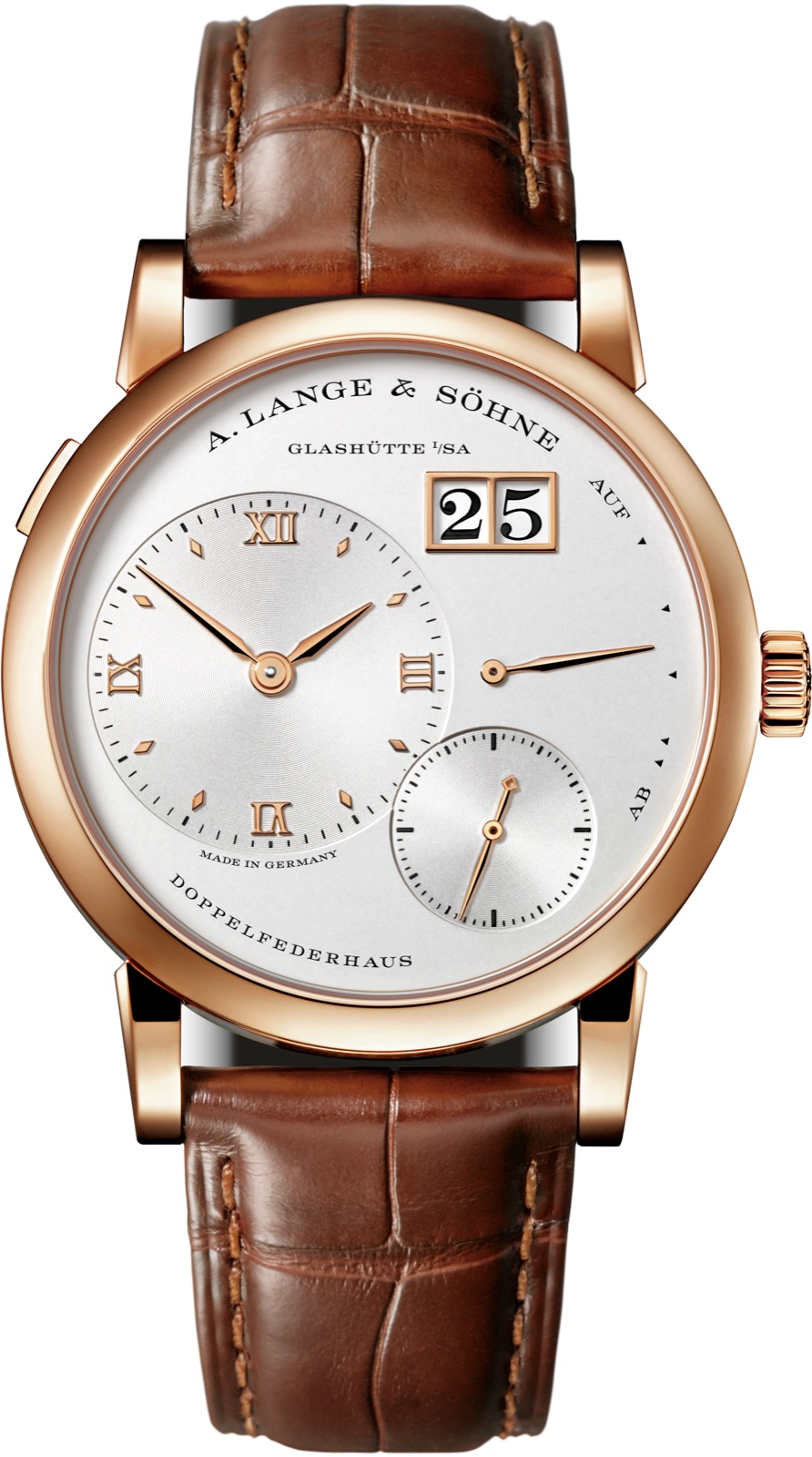
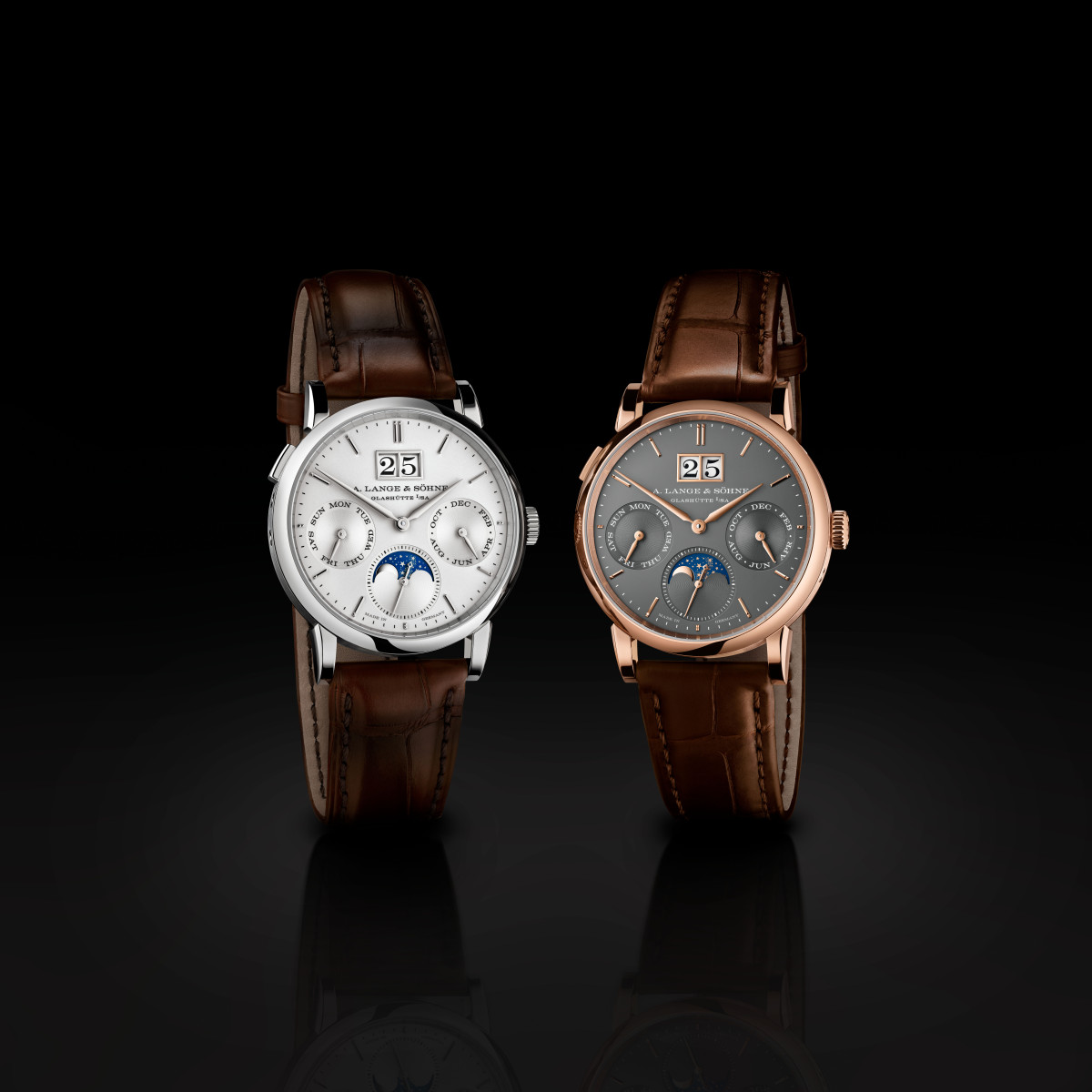
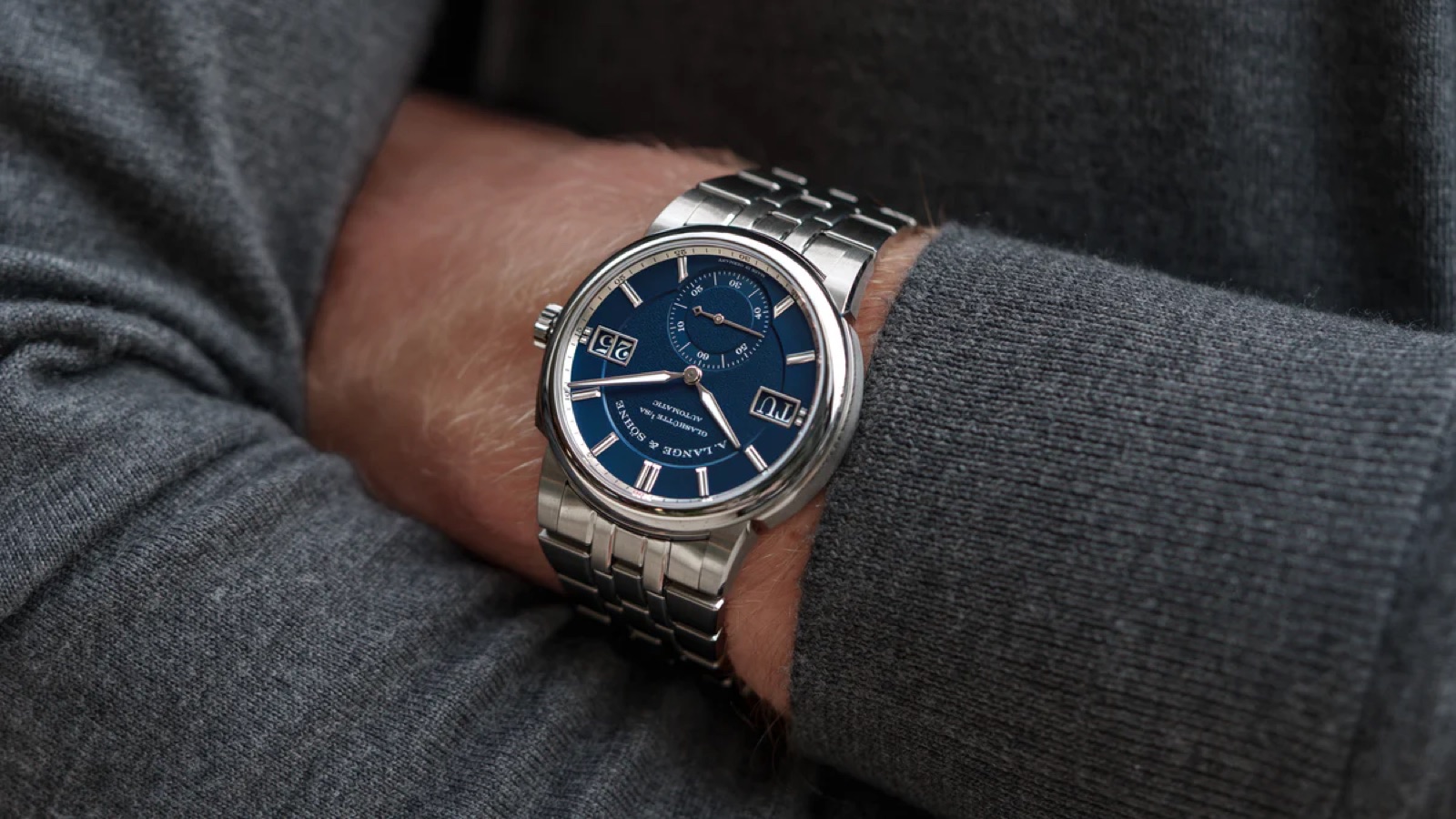
The single innovation most associated with A. Lange & Söhne is the outsize date. The Lange 1 of 1994 was the first regularly produced wristwatch to carry a large, clear date displayed in two side-by-side windows, big enough to read at a glance. The mechanism behind it uses two separate discs working together, which is harder to build than a single small date wheel and far more legible. It became the company's best-known feature, drawn from the Five-Minute Clock young Ferdinand Adolph Lange helped build for the Semperoper a century and a half earlier.
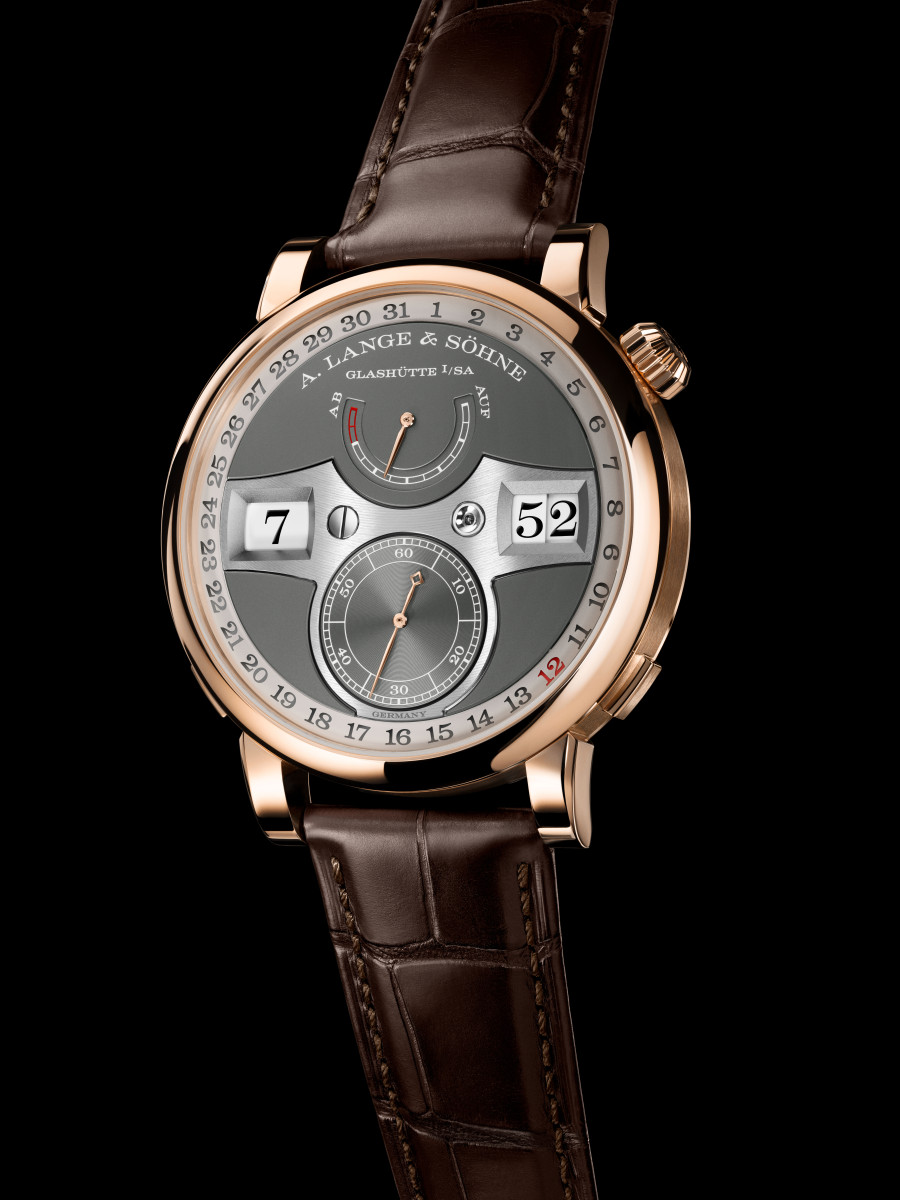
Then there is the Zeitwerk, which takes an even bolder idea and executes it precisely. Instead of hands sweeping around a dial, the Zeitwerk displays the time in jumping numerals through windows, like a mechanical digital clock. The difficulty is that the numerals must jump instantly and in perfect step, which demands a great deal of stored energy released in a controlled snap. Getting that right in a mechanical watch is a serious engineering problem, and Lange solved it.
The company has other technical firsts. The Sax-0-Mat caliber of 1997 introduced a Zero-Reset mechanism: pull the crown and the balance wheel stops while the seconds hand jumps instantly to zero, letting the owner set the time to the second. The three-quarter plate and German silver construction, inherited from the original firm, give the movements both rigidity and their warm golden aging.
At the summit sit the grand complications, watches that combine many functions at once. The Tourbograph Perpetual "Pour le Mérite" carries a chainmaster driven fusee, a tourbillon, a chronograph, and a perpetual calendar, and retails around $564,000. A Grand Complication has reached $2,600,000. These are proof-of-capability watches, built in tiny numbers to show what the workshop can do when nothing is spared.
The Collections
Lange's watch families, from simple dress watches to the Zeitwerk.
The lineup divides into dress classics, technical showpieces, and a single sports outlier. Prices start around $18,000 and climb into six and seven figures, but every model shares the same in-house construction and hand finishing.
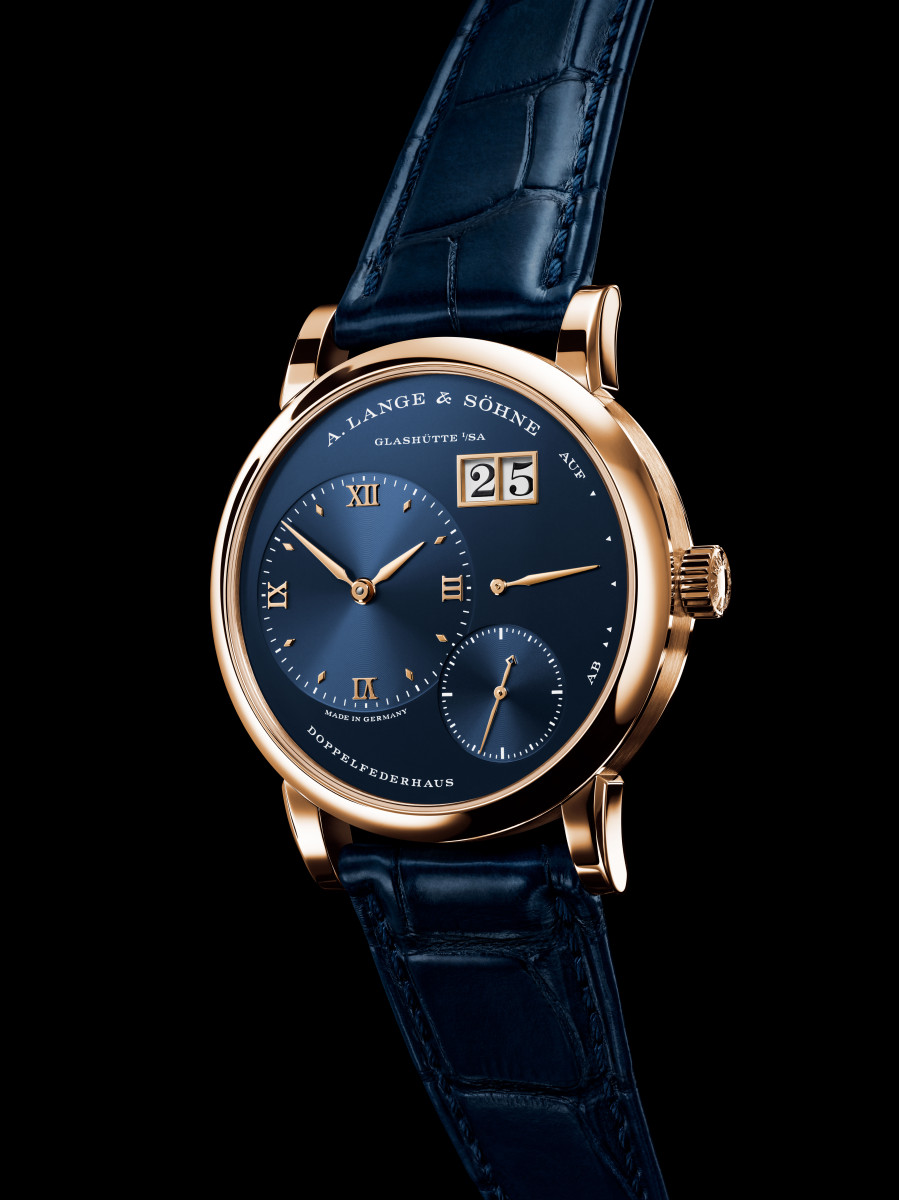
Lange 1
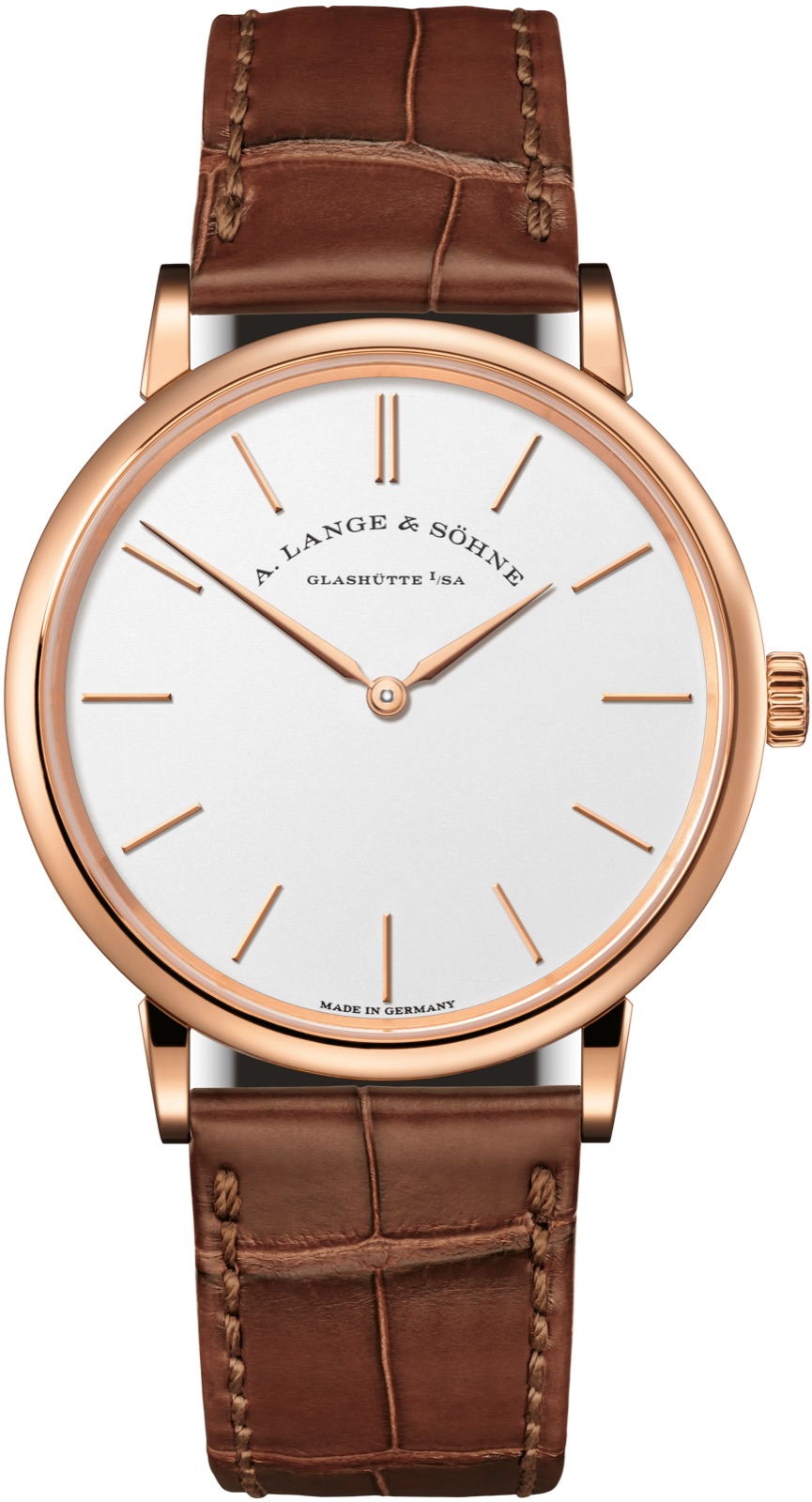
Saxonia
Zeitwerk
1815
Richard Lange
Odysseus
Cultural Impact
How Lange earned collectors' respect while staying little known.
A. Lange & Söhne occupies a peculiar cultural space. It is one of the most respected names in watchmaking and one of the least famous outside it. This is by design. The company shrank its retail presence deliberately and never chased celebrity ambassadors the way its rivals do. Its prestige circulates among people who already know, which is exactly the audience it wants.
For collectors, that scarcity is the appeal. Around 5,000 watches a year is a tiny number, roughly the crowd at a small college basketball game, spread across the entire world. The watches are made mostly in gold and platinum, and the grand complications appear in editions of a handful. This combination of low output and high craft supports strong demand on the secondary market, where the rarest pieces trade well above their already substantial retail prices.
The company's reputation is strongest among the connoisseurs who value finishing and mechanics over brand noise. In that circle, the phrase used again and again is that Lange competes with Patek Philippe at the pinnacle, and does so as the only German house in a Swiss-dominated field. That national distinction gives it a story the Geneva makers cannot tell: the lost company that came back with the country.
The refounding itself became the brand's central myth, and unusually, it is a true one. The 145-years-to-the-day timing, Walter Lange returning to a town behind the fallen Wall, the workshop rebuilt from tooling that had to be invented again. When the company unveiled a statue of Walter Lange in Glashütte in 2020, it was honoring a man who had actually done what the legend says.
Where They Stand Today
Where Lange stands today, its strengths, and its challenges.
A. Lange & Söhne sits at the very top of the watch market, competing with Patek Philippe, Vacheron Constantin, and Audemars Piguet for the attention of buyers who want the finest mechanical watches money can make. It does this from Glashütte, backed by Richemont's resources but run with a deliberate discipline that keeps production around 5,000 pieces a year and distribution concentrated in a small network of boutiques.
Wilhelm Schmid, CEO since January 2011 and still in the role in late 2025, came from BMW and before that from the oil industry, and he brought a strategist's patience to a craft business. His decision to cut points of sale from 270 to 52 ran against the instinct to grow, and it worked, tightening the brand's exclusivity and its margins at once. At the parent level, Nicolas Bos became Richemont CEO on 1 June 2024, and Lange's product direction remains in the hands of Anthony de Haas, with manufacturing under Tino Bobe.
The strengths are clear. Few companies can match Lange's finishing, and fewer still have a story with the emotional weight of the refounding. The Odysseus proved the house can stretch into new territory, the sports watch category, without cheapening what it does. Prices in the higher ranges keep climbing, and demand for the best pieces outruns supply.
The challenges are the ones that come with the position. The market for watches costing as much as a house is narrow, and it moves with the fortunes of the wealthy. The very restraint that makes Lange admired also keeps it obscure, which is fine until the day it needs new buyers who have never heard the name. And a company whose whole identity rests on hand craft must keep finding and training the hands, in a small Saxon town, generation after generation.
What to watch for is whether Lange can widen its audience without diluting the thing that makes it Lange. The Odysseus was one answer, the 2025 Honeygold and onyx limited editions another. The company has already come back once from being shut down. The question now is whether it can stay itself as the market changes, which is what Walter Lange's motto asks: never to stand still.