



IWC Schaffhausen
How an American engineer brought factory methods to Swiss watchmaking.
The Story
How an American engineer brought factory methods to Swiss watchmaking.
In the late 1860s an American named Florentine Ariosto Jones had an idea most bankers would have called a fantasy. Jones had run E. Howard & Co. in Boston, then the leading watch manufacturer in the United States, a place that made watches the modern way: with machines, in volume, to tight and repeatable tolerances. He looked at Switzerland and saw the opposite. Superb hands, cheap labor, and almost no factories.
His idea was to combine the two. Bring American machinery and American management to Swiss workbenches, build watches to precise tolerances at scale, and sell them back into the booming American market. He was twenty-seven or so when he crossed the Atlantic to try it.
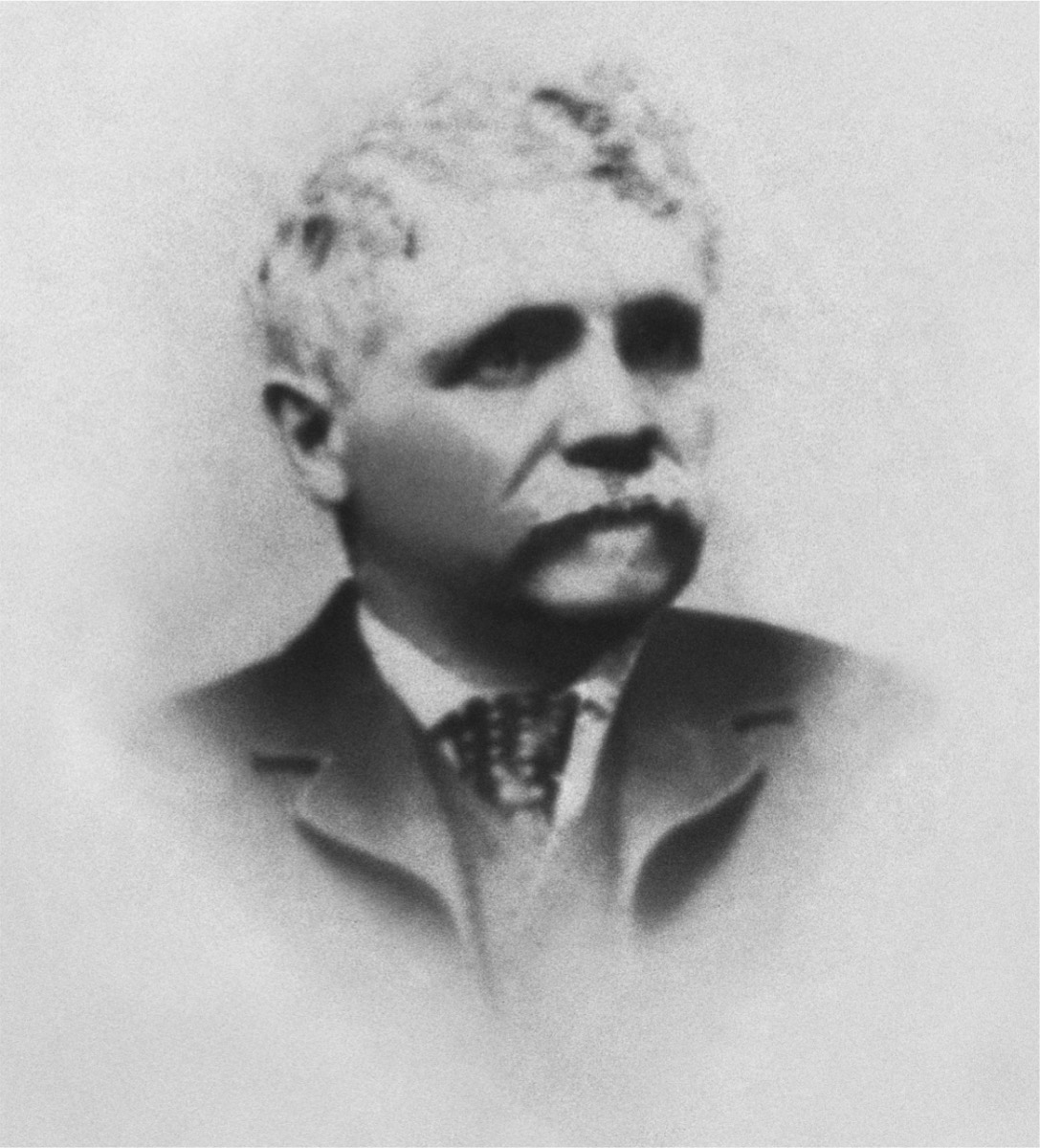
Jones and his traveling companion, a fellow American watchmaker named Charles Kidder, first tried the French-speaking watch valleys of western Switzerland. The local guilds were unimpressed. Established makers had no interest in a foreigner turning their cottage craft into an assembly line, and they said so. So Jones went east instead, to Schaffhausen, a town on the Rhine in the German-speaking corner of the country that had almost no watch industry to defend.
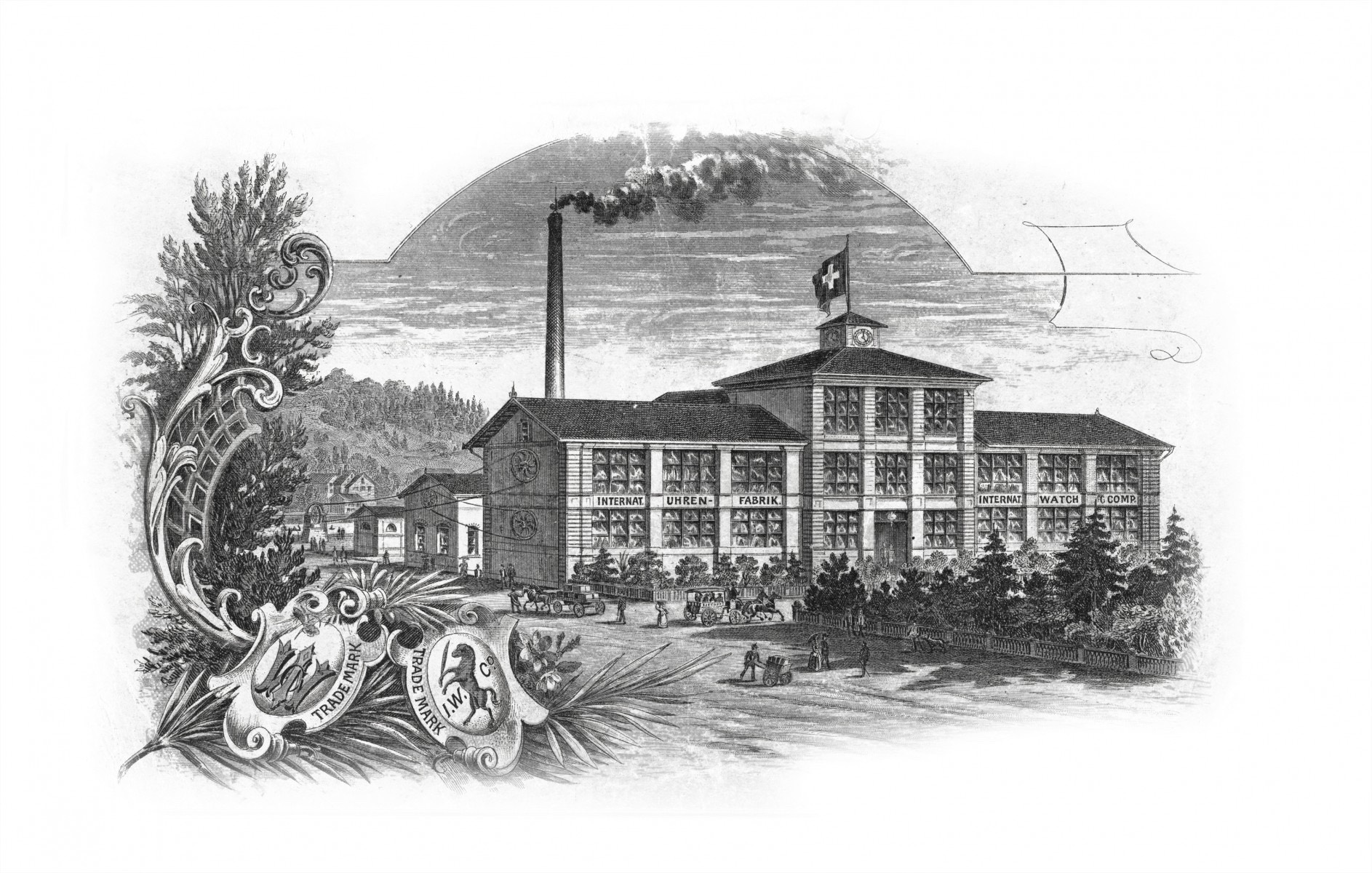
The choice was practical. Schaffhausen sat on falling water, and Jones needed power to drive his machines before electricity was an option you could order. He bought a site from Heinrich Moser's hydroelectric works, and by 1875 a new 45-meter factory stood on the riverbank, room for up to 300 workstations, with 196 people at the benches on day one. That building, on the banks of the Rhine, is still the company's headquarters today.
The company he registered became the International Watch Company, a deliberately American-sounding name for a firm that was betting everything on American customers. Note the ambition baked into the word "International." Jones was never trying to make Swiss watches for Swiss people.
Then the plan met the tariffs. Import duties on finished watches entering the United States climbed, the financing strained, and the machines themselves gave technical trouble that ate into the tight margins Jones had promised his backers. By 1875 stockholders were warning that the company stood on the edge of collapse. Jones was forced to give up control, and the firm eventually went bankrupt.
What saved the enterprise was local money with patience. On 17 February 1880, Johann Rauschenbach-Vogel, a Schaffhausen machine manufacturer and one of IWC's own stockholders, took over the company. The Rauschenbach family would steer it for decades, and the manufacturing discipline Jones installed did not leave when he did. The machines, the tolerances and the engineering approach all stayed.
IWC remains the only major Swiss watch factory in eastern Switzerland, an outsider by geography from the first day. It was founded by an American who failed at his own plan, in a town chosen for its river, to sell to a country that taxed him out of the market. Almost nothing went the way Jones planned, but the factory he built is why the name survives.
Philosophy & Identity
Why IWC designs for function first, and how it builds its watches.
IWC's motto is Probus Scafusia, which translates to good, solid craftsmanship from Schaffhausen. It reads more like a spec sheet than marketing: solid, honest, made here. The company calls itself "the Engineer of Watchmaking," and unlike most brand slogans, this one describes what actually happens in the building.
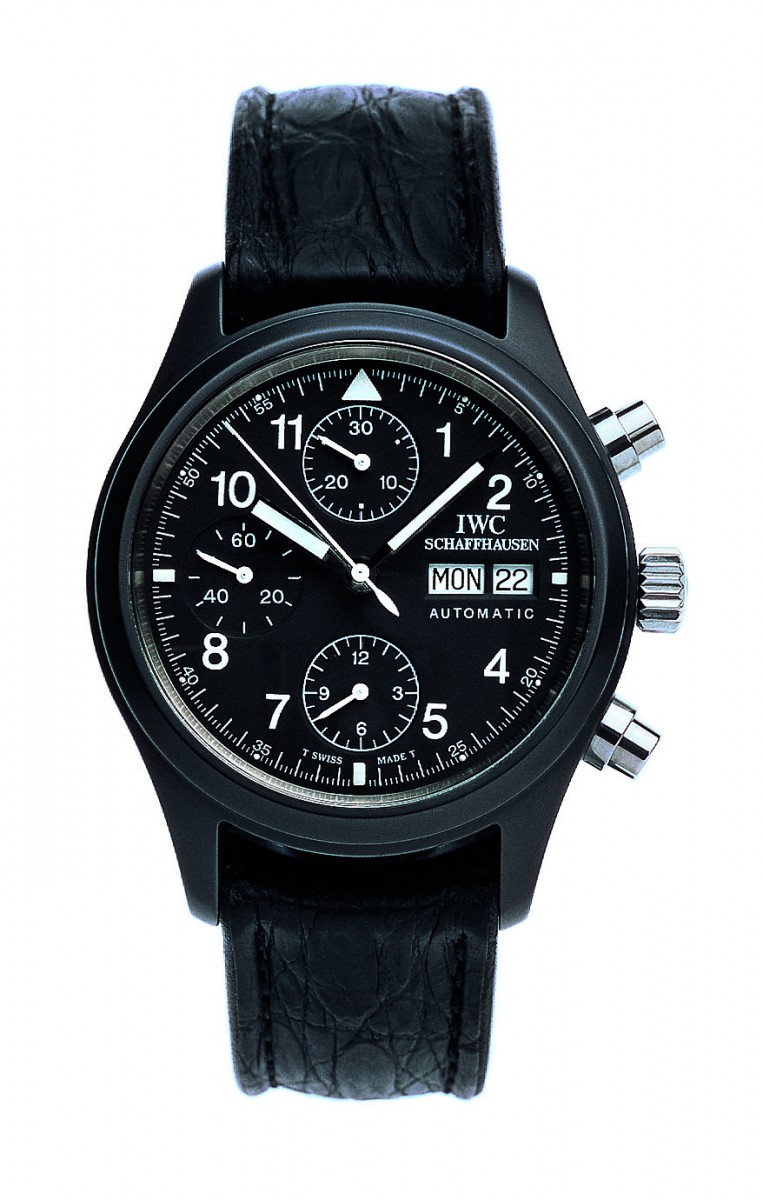
The design principle is form follows function. Decoration is allowed only when the mechanism has already done its job. This is why an IWC dial tends to read like an instrument, high contrast, generously sized numerals, a hand you can find in a glance. When your customers are pilots and engineers, legibility is a safety feature, not a style choice.
A quick word on what "in-house" means, because the phrase gets thrown around as praise without content. A movement is the engine inside the watch, the assembly of gears and springs that keeps time. Making it in-house means the company designs and machines that engine itself rather than buying a generic one and stamping its name on the dial. IWC does both: it builds its own calibres for its high-end pieces, and it uses well-chosen outside movements in some entry-level watches. The house is honest about the difference, which is more than can be said for a lot of the trade.
IWC was also an early adopter of materials that most watchmakers found too hard to work. Titanium is light, strong, and stubbornly difficult to machine and finish. Ceramic is scratch-resistant to the point of near-permanence and shatters if you machine it wrong. IWC pushed both into production watches when doing so meant solving real manufacturing problems.
CEO Chris Grainger-Herr describes the design balance as roughly 60% continuity and 40% innovation. The Big Pilot's Watch and the original Portugieser, both rooted in designs from 1939 and 1940, look essentially the same today. The company protects its icons and re-engineers what sits underneath them.
The customer, then, is someone who wants substance they can verify: what the watch does and how, rather than the most gem-set bezel, the ring around the dial. IWC positions itself against the flashier houses by being legible, robust, and slightly under-dressed on purpose.
There is also a genuine sustainability record here. IWC was the first Swiss luxury watchmaker to publish a sustainability report to Global Reporting Initiative standards, and when the WWF rated 15 Swiss watch manufacturers on environmental performance in December 2018, IWC ranked first and was the only one rated "Ambitious." For an industry that markets timelessness while often ignoring its own footprint, that is worth stating plainly.
The Journey
IWC's history, from near collapse to a top award in 2024.
The Founding and Rauschenbach Era · Survival
The company that Jones built and lost passed to Johann Rauschenbach in 1880, and the family's steady hand kept the lathes turning through the decades when the American dream had clearly failed. The factory found its footing making pocket watches to a high standard, and it began to accumulate the mechanical credibility that would define it.
An early highlight came from a clever bit of licensing. In 1884 Rauschenbach acquired the rights to the Pallweber system and built the first "digital" watches in IWC's history, pieces that showed hours and minutes on rotating discs through windows instead of hands. (A hundred and thirty years before smartwatches, someone in Schaffhausen was already selling a numeric display.)
The Instrument Years · Pilots, Portugieser, and Purpose
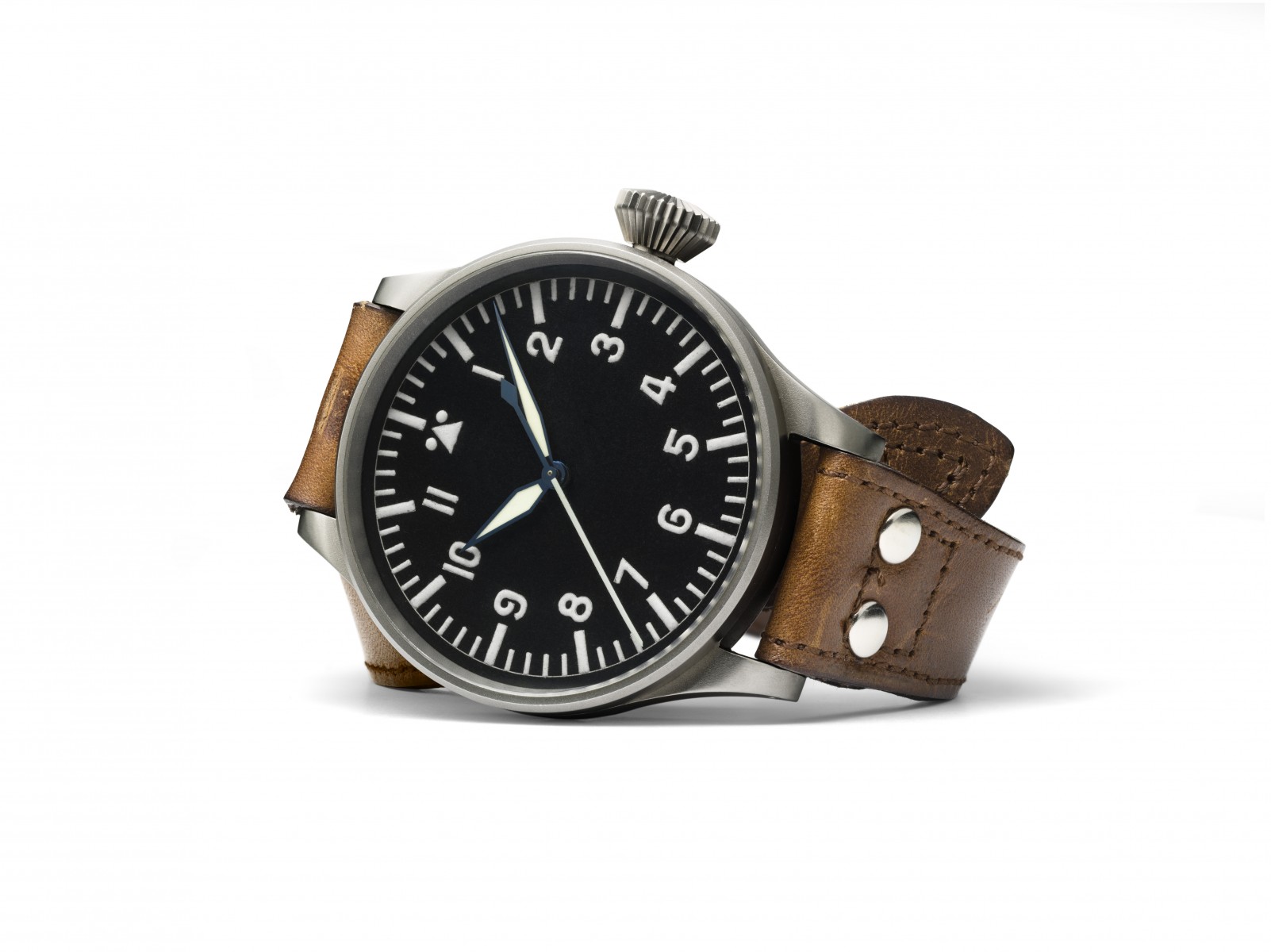
This is where IWC became the IWC people recognize. In 1936 it introduced the Spezialuhr für Flieger, a special watch for pilots, and in 1940 the enormous Große Fliegeruhr, 55 mm across, roughly the diameter of a modern espresso cup, built for military aviators who needed to read the time in a shaking cockpit. IWC was one of only five makers producing watches for the German Air Force at the time.
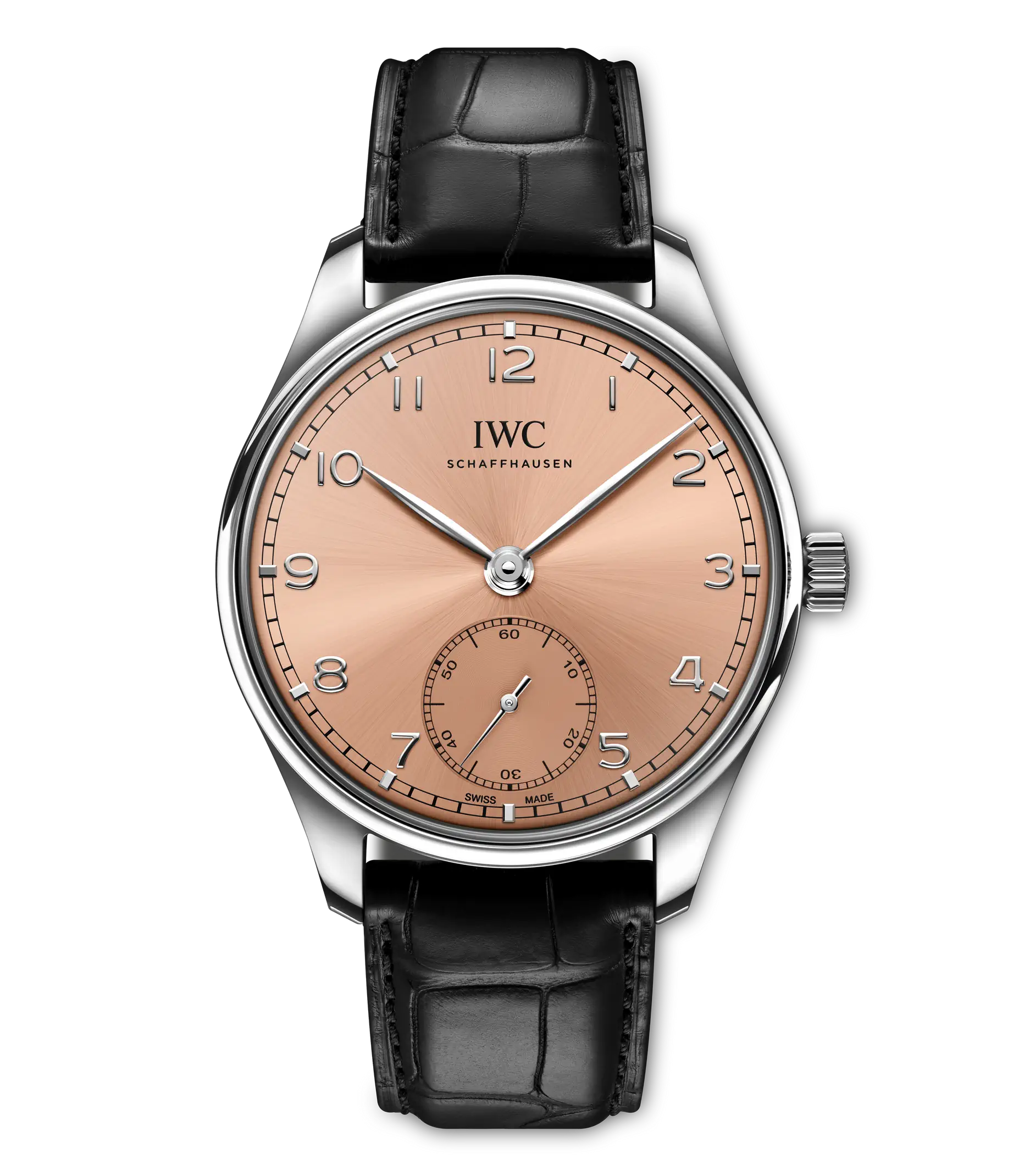
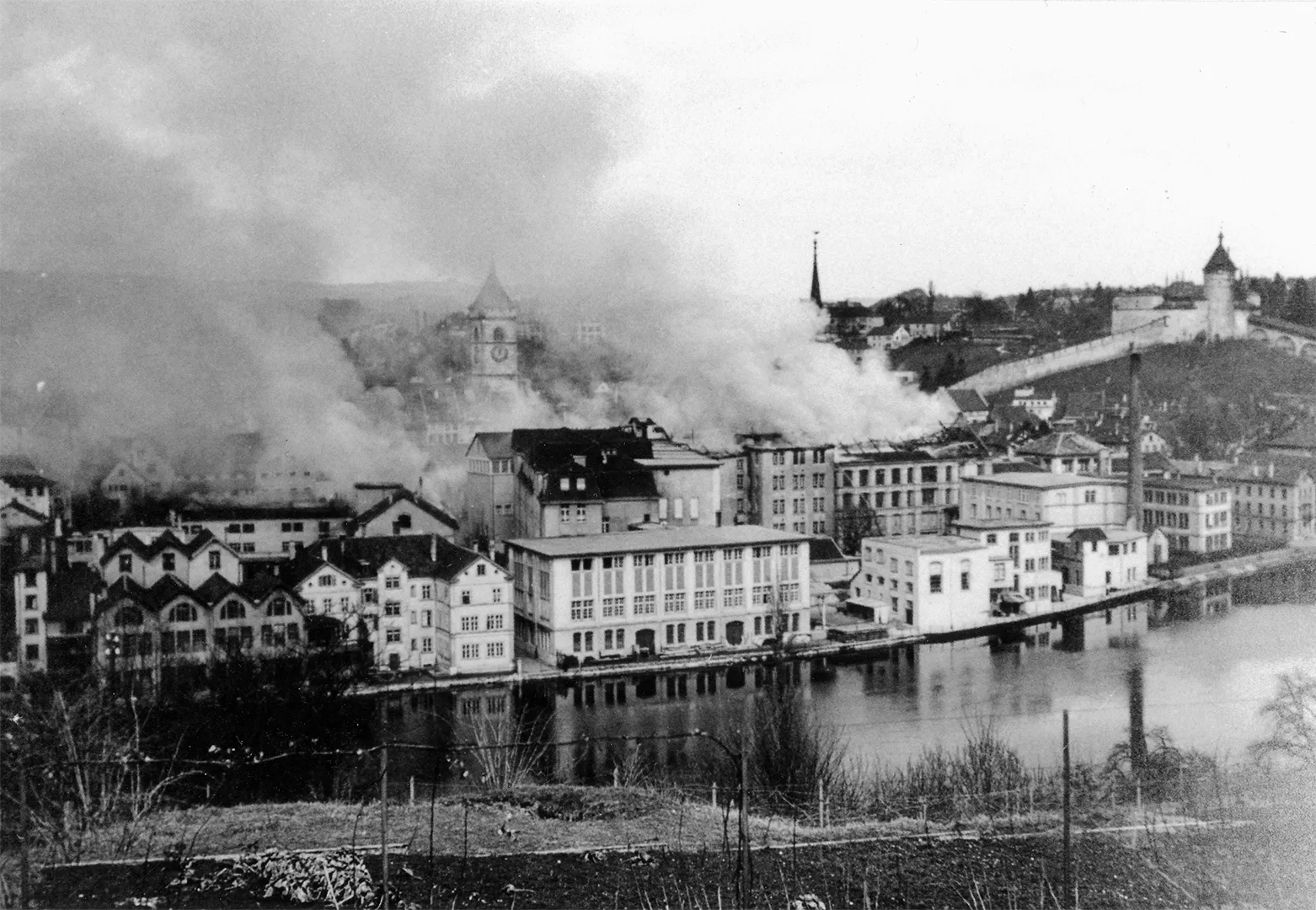
The Portugieser was born from a customer request, not a boardroom. In 1939 two importers from Portugal asked for large wristwatches fitted with high-precision pocket-watch calibres, and IWC obliged with a clean, oversized watch that looked decades ahead of its time. The war nearly ended the story: on 1 April 1944 the U.S. Army Air Forces bombed Schaffhausen, and a bomb struck the watch factory but failed to detonate. The company's own fire brigade put out the flames from nearby incendiaries. (History occasionally hinges on a dud fuse.)
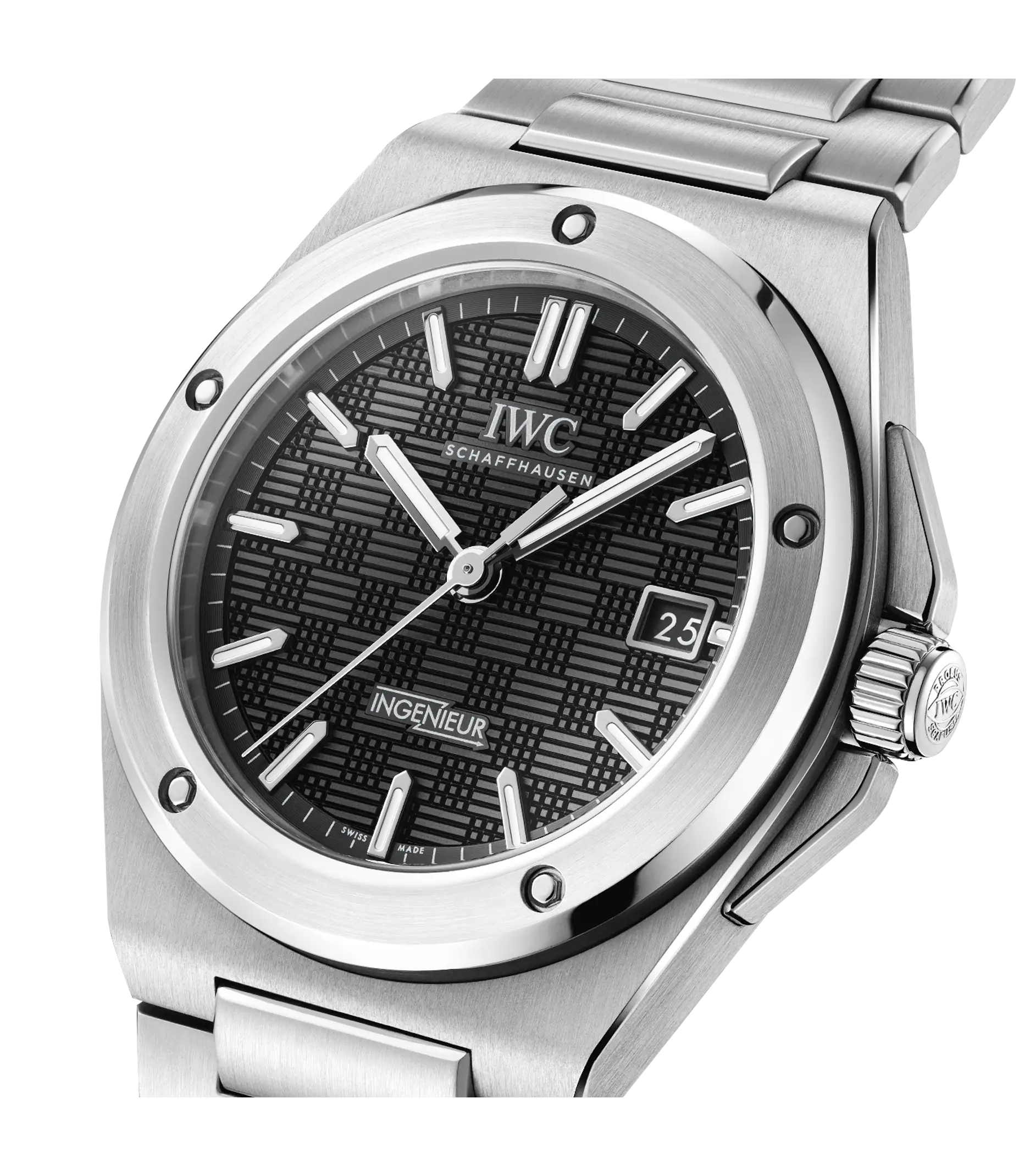
Postwar, IWC turned engineering problems into products. The Pellaton winding system arrived in 1950, a self-winding mechanism that captured wrist motion in both directions with unusual efficiency. The first Ingenieur followed in 1955, a watch built to resist magnetism, which ruins a mechanical movement's timekeeping by disturbing its balance spring. Then came the first Aquatimer diver, and IWC's contribution to the Beta 21, the first Swiss quartz movement.
The Blümlein Rescue · Surviving Quartz
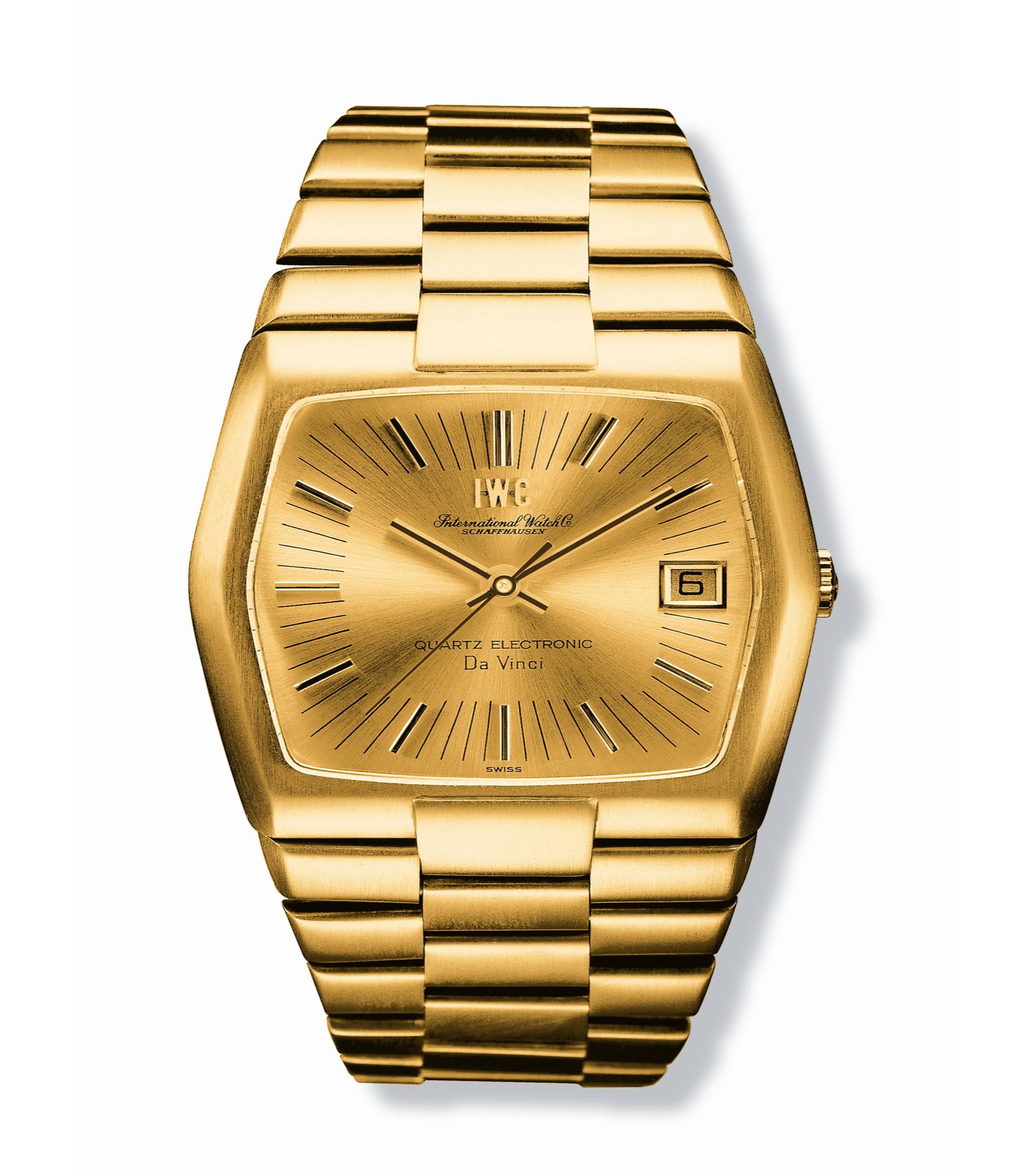
To understand what happened next you need the quartz crisis. In the 1970s cheap, accurate battery-powered quartz watches, keeping time by the vibration of a tiny crystal, flooded the market and nearly destroyed the Swiss mechanical industry. Dozens of famous names collapsed. Mechanical watchmaking, the slow art of springs and gears, looked obsolete.
IWC survived because of Günter Blümlein, who took a leading role in 1981 and pushed hard changes fast: rebuilding the customer base, stabilizing the finances, and betting that mechanical watches would come back as objects of desire rather than mere timekeepers. He was right, and he was ambitious about it. In 1991 he assembled the LMH Group, folding IWC together with Jaeger-LeCoultre and the newly revived A. Lange & Söhne under one roof.
The mechanical bet reached its peak in 1985, when Blümlein asked the watchmaker Kurt Klaus to build a grand complication, a watch stacking multiple advanced functions, for the wrist. The result, the Destriero Scafusia of 1993, carried a perpetual calendar, a minute repeater that chimes the time, a tourbillon, and a split-seconds chronograph, about as much mechanism as one can cram into a case.
The Richemont Era · Scale and Icons
In July 2000 the Swiss luxury group Richemont bought LMH for 2.8 billion Swiss francs, and IWC became part of a portfolio that now includes A. Lange & Söhne, Jaeger-LeCoultre, Panerai, Piaget, Roger Dubuis, and Vacheron Constantin. Crucially, IWC kept its own management. The takeover added resources without gutting the identity.
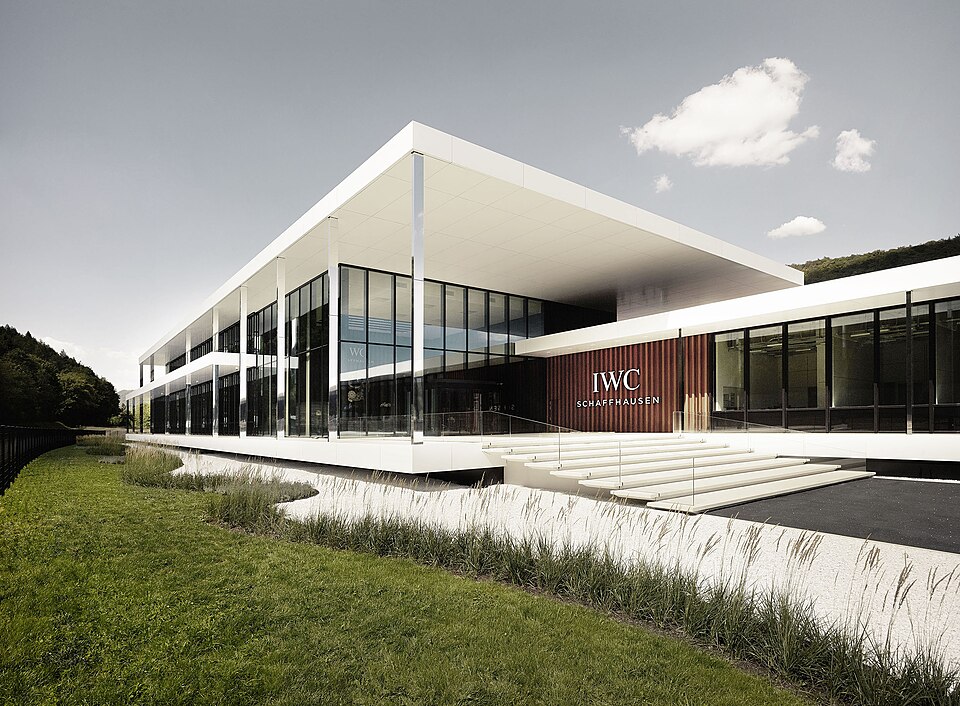
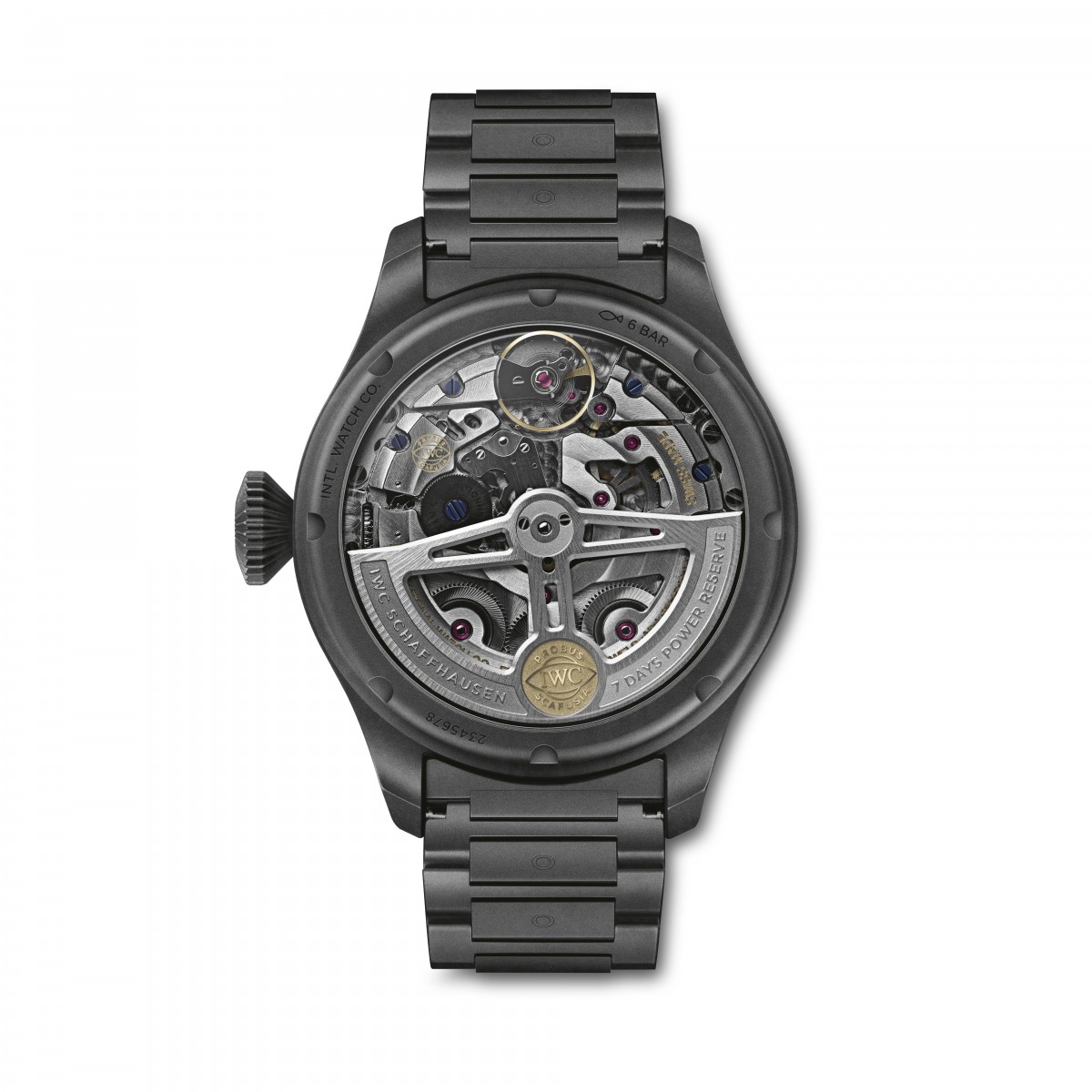
The same year brought the Calibre 5000, an automatic movement with a seven-day power reserve, meaning it runs a full week off the mainspring without winding. In 2002 the Big Pilot's Watch returned in its now-familiar large-case, clean-dial form. In 2018 IWC opened a modern production center in Schaffhausen that pulled many manufacturing steps under one roof. And in 2024 it took the top prize at watchmaking's most prestigious awards.
Defining Innovations
The IWC inventions that were hardest to make, and why they matter.
Start with the Pellaton winding system of 1950. Most automatic watches wind in one direction and waste the other half of your wrist's motion. The Pellaton system uses a cam and two pawls to capture movement in both directions, feeding energy to the mainspring efficiently enough to run modern IWC calibres for seven days. The mechanism is small, it takes constant load, and it has to be made to fine tolerances or it slips. IWC has refined it for over seventy years.
Then the perpetual calendar Kurt Klaus designed in the 1980s. A perpetual calendar tracks the date, day, month, and leap years automatically, correctly handling the fact that months have different lengths and February occasionally gets an extra day. Most such mechanisms are fiendish to adjust, requiring a technician and a set of pushers. Klaus built his so the entire calendar advances from the crown, the winding knob, in a single direction. An ordinary owner can set it, and that ease of use is the achievement.
The 2024 Portugieser Eternal Calendar took this further. It is IWC's first secular calendar, meaning it correctly accounts for the century years that skip the leap day, and its moon-phase display, the little disc tracking the lunar cycle, is accurate to within one day over 45 million years. The number sounds absurd, but it is a real specification.
Materials are the other strength. IWC pioneered titanium and ceramic cases when both were difficult and unproven. Titanium resists corrosion and weighs far less than steel but fights the tools; ceramic resists scratches but cracks under bad machining. The Ingenieur's anti-magnetic construction is a related engineering story: it shields the movement inside a soft-iron cage so magnetic fields, which throw off timekeeping by disturbing the balance spring, pass around the mechanism instead of through it.
IWC also helped develop the Beta 21, the first Swiss-made quartz movement. That the company that built the Destriero Scafusia also had a hand in Switzerland's answer to quartz tells you it was never dogmatic. It solved whatever problem the era put in front of it.
The Collections
IWC's main watch families and what each is for.
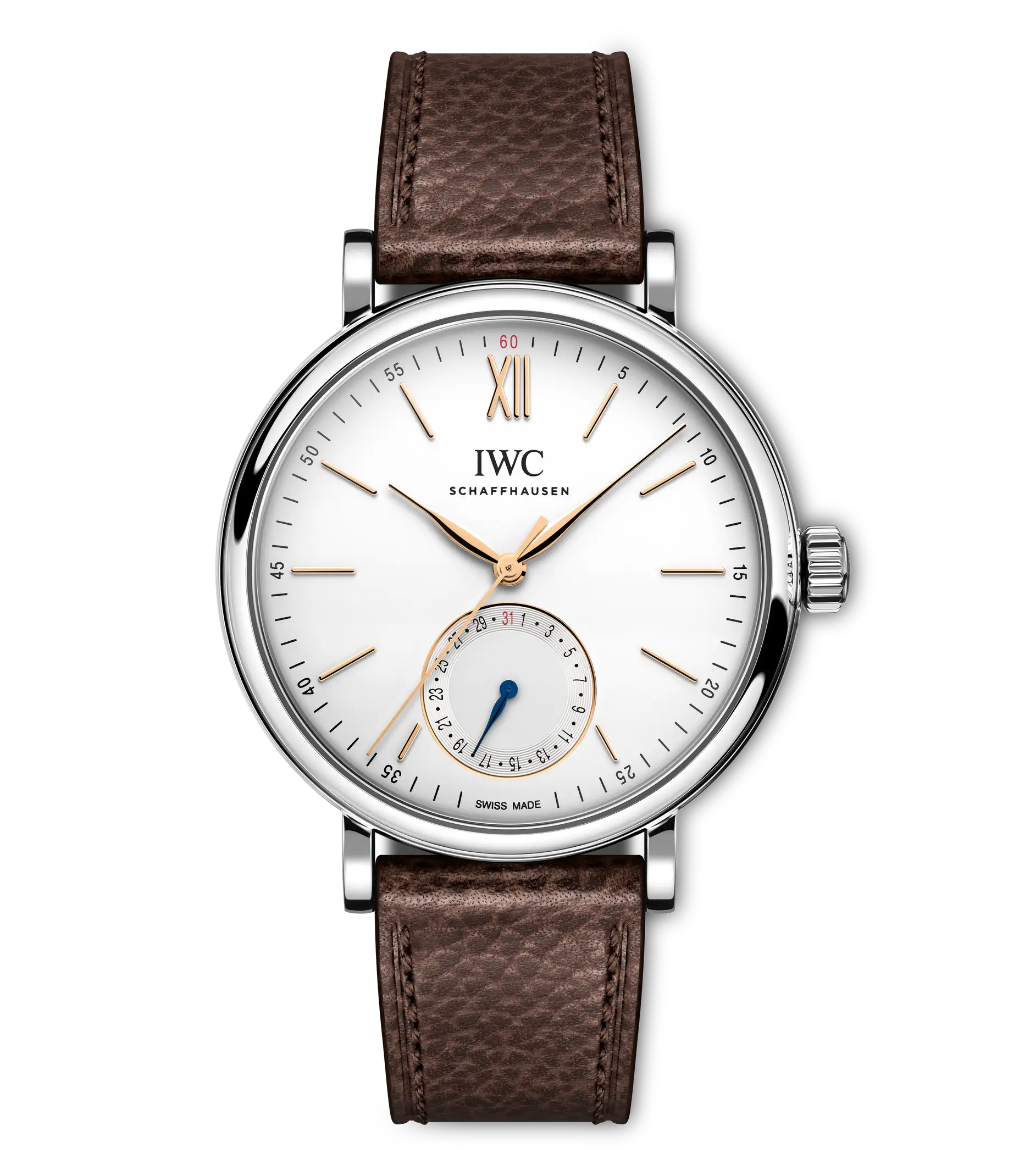
IWC organizes its lineup around clear use-cases rather than price tiers. There is a watch for the cockpit, a watch for the boardroom, a watch for the water, and a watch for the dress shirt, and each family has a distinct look you can spot across a room.
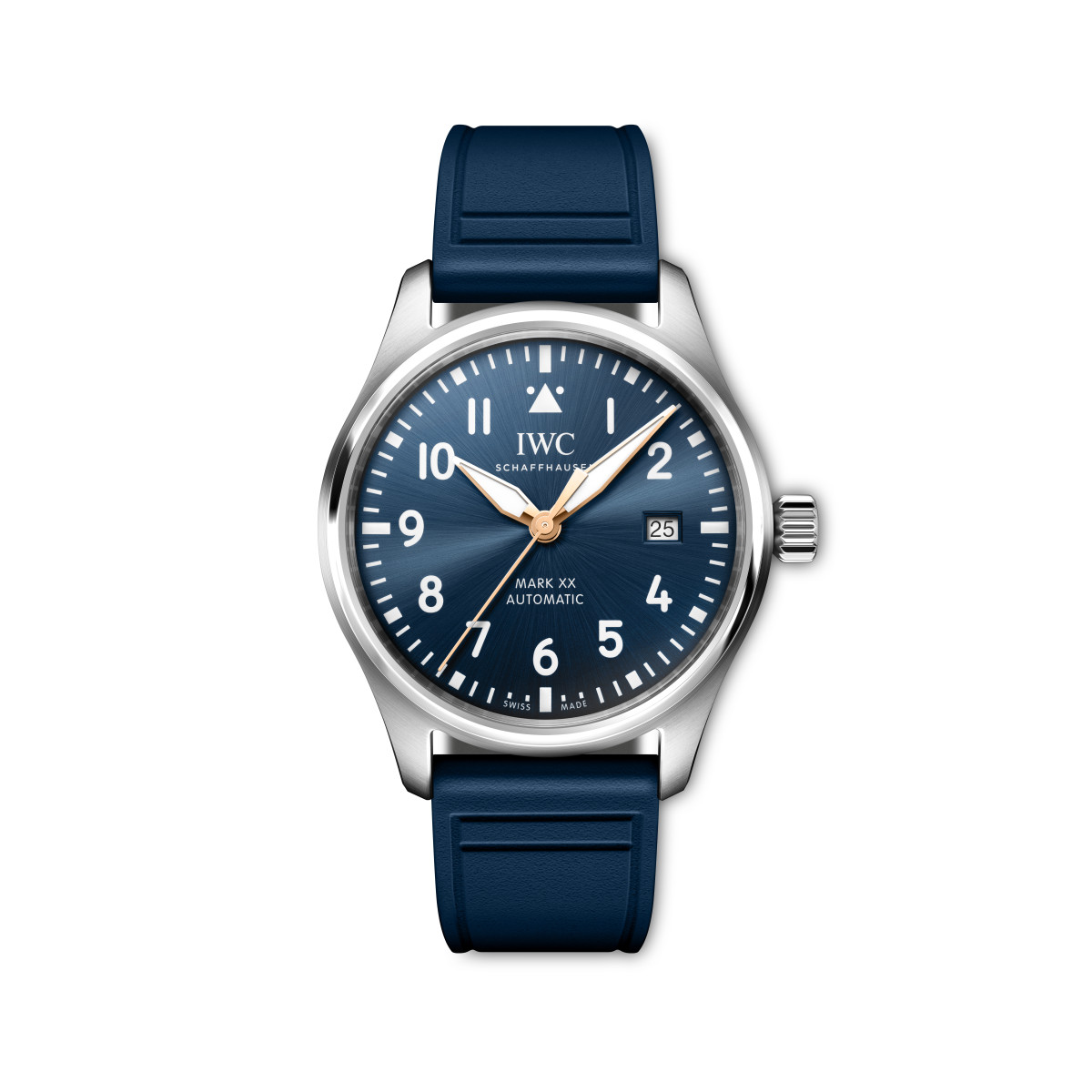
Pilot's Watches
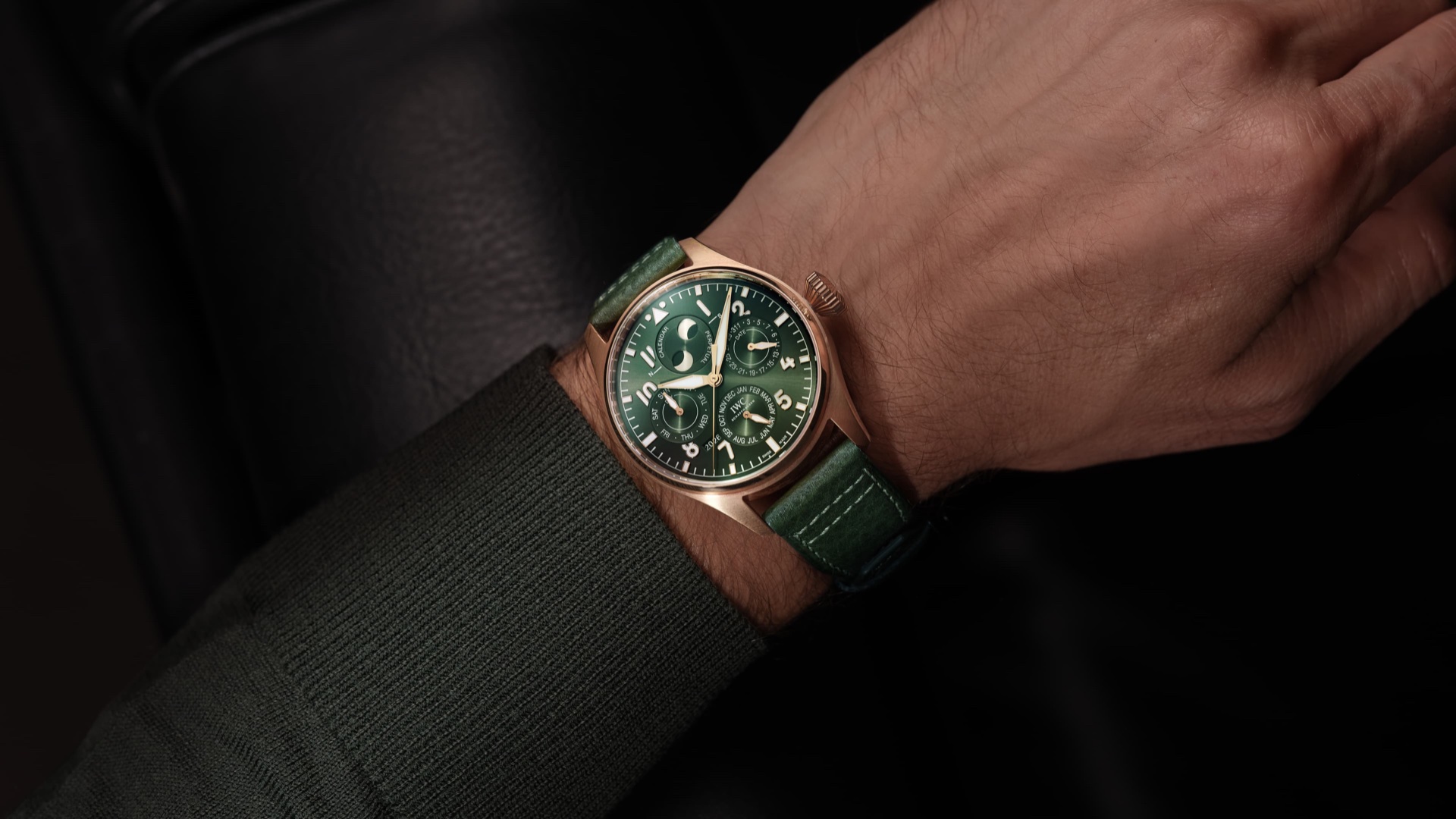
Portugieser
Portofino
Ingenieur
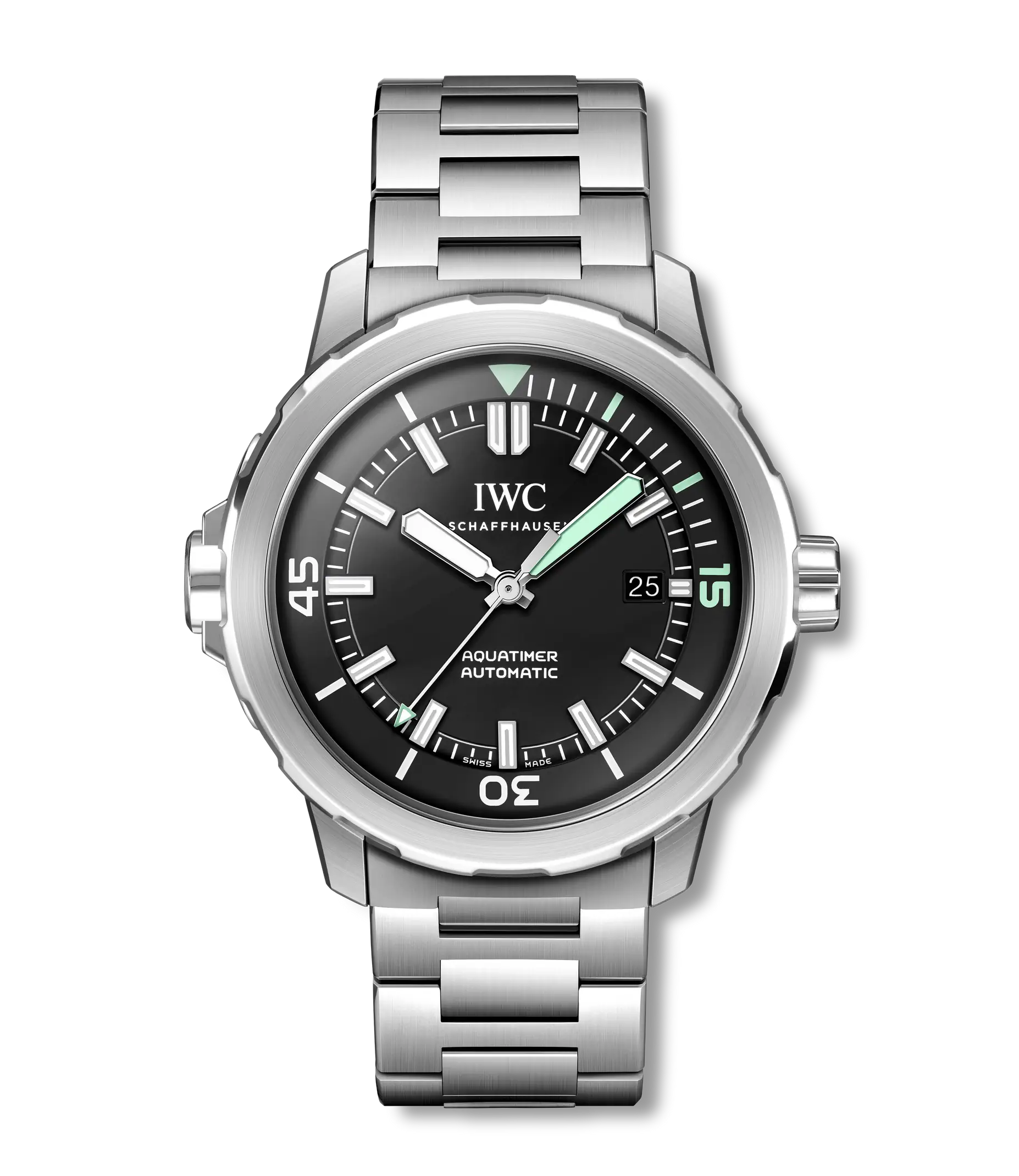
Aquatimer
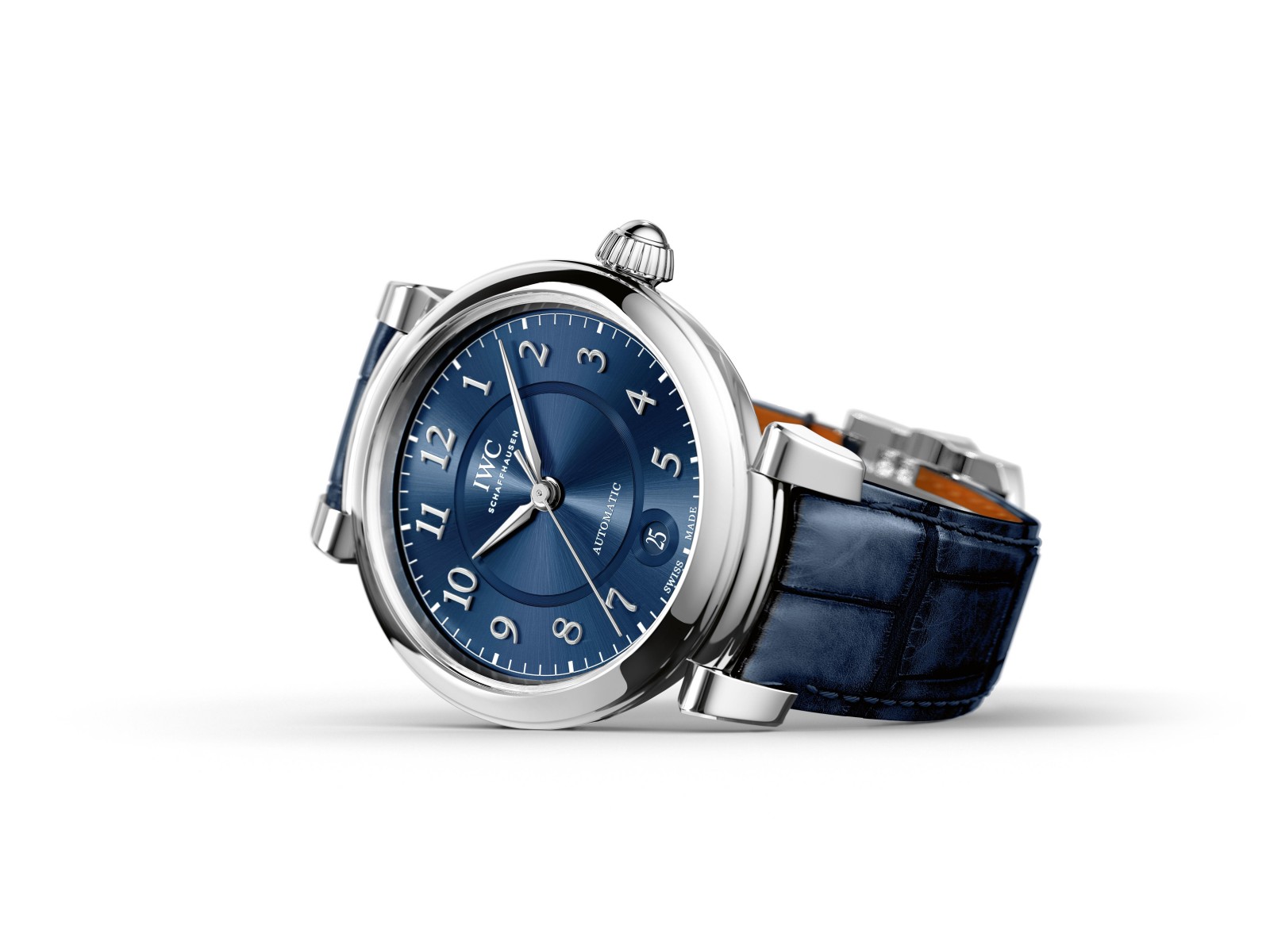
Da Vinci
Cultural Impact
How aviation, motorsport and one wartime bomb shaped IWC's image.
IWC's cultural footprint follows its instruments. The pilot's watches gave the brand a natural home in aviation, and the association with flight, precision, and a bit of controlled danger has shaped its image ever since. This is a brand that markets test conditions and mission readiness rather than red carpets, and the difference is real.
The company has built its partnerships around the same themes: aviation, motorsport, and engineering achievement, alongside conservation work that fits its early sustainability record. These are alliances with activities that share IWC's values rather than borrowed celebrity glamour, which keeps the brand's story coherent.
Among collectors, IWC occupies a specific and respected niche. It offers serious mechanical watchmaking, including genuine grand complications, at prices that undercut the most exclusive Geneva houses. That value draws people who care more about what the movement does than about the logo. The Big Pilot and the Portugieser are the best-known models, and both have strong followings.
The story that watch people love to tell is the 1944 bomb, the one that hit the factory and failed to explode while the company's own fire brigade beat back the flames from nearby incendiaries. It captures something about IWC's self-image: solid, durable, a little lucky, and still standing on the same riverbank.
Resale demand tracks the icons. The Big Pilot, the classic Portugieser, and the historically significant complications hold their standing well, while entry-level pieces behave more like ordinary luxury watches. IWC is not the speculative frenzy that surrounds a few steel sports models elsewhere, and for buyers who actually want to wear the thing, that stability is a feature.
Where They Stand Today
Where IWC stands today, its strengths, and its challenges.
IWC sits in a strong middle-upper position within the Richemont group and the wider Swiss industry. It competes with Jaeger-LeCoultre, Omega, and Breitling for the buyer who wants real mechanical substance without paying Patek Philippe or Vacheron Constantin prices. Under CEO Chris Grainger-Herr, who came to watchmaking through architecture and brand strategy before taking the top job in 2017, the company has leaned into its engineering identity while modernizing how it presents itself.
The 2024 Aiguille d'Or for the Portugieser Eternal Calendar was a significant marker. Winning watchmaking's overall best-in-show prize against houses with far grander reputations for haute complication signaled that IWC's high-end work is being taken seriously at the very top of the field. The 2018 production center gives it the manufacturing capacity to back that up.
The strengths are clear: a coherent design language, genuine in-house movements at the high end, honest use of outside movements at the entry level, a leadership record on sustainability, and icons that need very little updating to stay relevant. The 60% continuity, 40% innovation formula has kept the Big Pilot and the Portugieser recognizable for over eighty years.
The challenges are the ones facing everyone in the trade. Prices at the entry level have climbed, and some of what once made IWC an accessible route into serious watchmaking now costs meaningfully more. The brand also has to keep the tool-watch honesty that defines it from softening into pure fashion as volumes grow.
What to watch for is whether IWC can keep balancing the two things it has always tried to be at once: a real manufacture doing hard mechanical work, and a scaled luxury brand inside a large group. The Eternal Calendar suggests the engineering ambition is intact. IWC is still solving hard problems in the same factory on the Rhine, as its 45-million-year moon phase shows.